
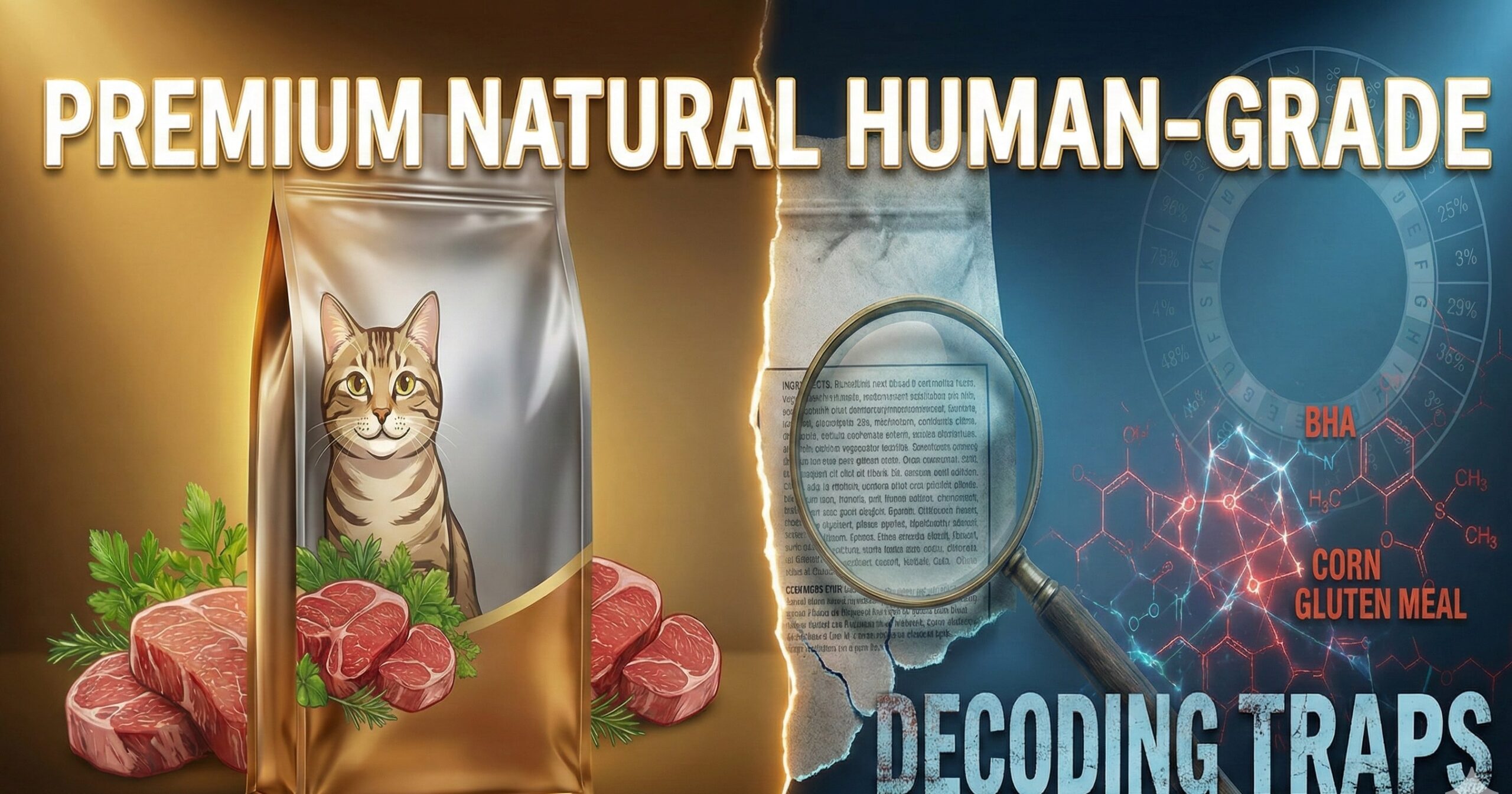
You are spending thousands of dollars on “Premium” or “Natural” cat food, hoping to give your pet a long, healthy life. The reality? You might be unknowingly feeding them cheap fillers and cancer-linked chemicals. Big brands often exploit complex labeling loopholes to hide low-quality ingredients. Don’t wait for a life-altering vet bill to learn what is actually inside that bag.
This technical guide deconstructs marketing terminology to help you identify high-quality nutrition based on science, not slogans.
1. The AAFCO Cipher: Percentage Rules You Must Know
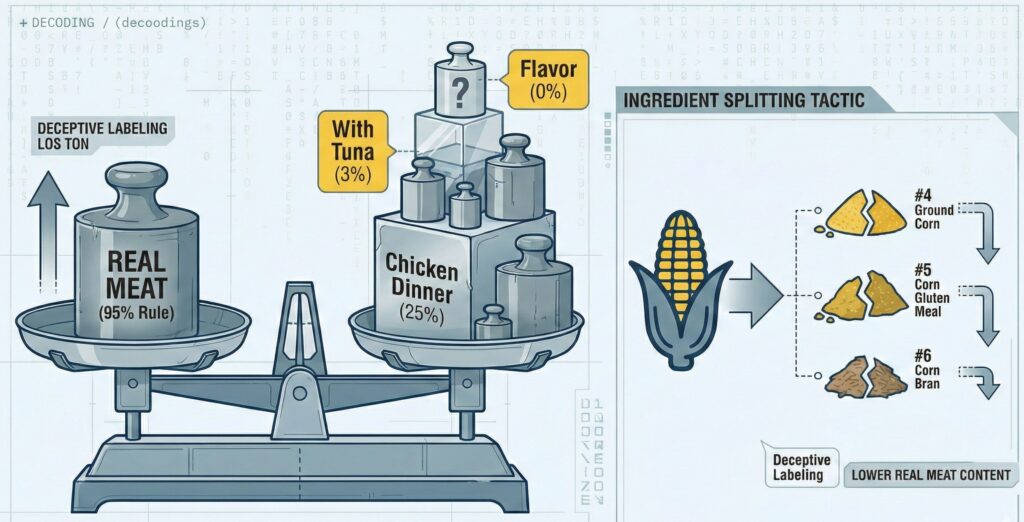
The Association of American Feed Control Officials (AAFCO) regulates what names can appear on a label. A single word can change the meat content from 95% to nearly 0%.
- The “95% Rule” (e.g., “Beef for Cats”): The named ingredient must constitute at least 95% of the product by weight (excluding water). This is the gold standard for quality.
- The “25% or Dinner Rule” (e.g., “Chicken Dinner” or “Salmon Entrée”): The named ingredient only accounts for 25% to 94% of the product. The rest is usually fillers like corn or soy.
- The “3% or ‘With’ Rule” (e.g., “Cat Food with Tuna”): Manufacturers only need 3% of the ingredient to use the word “With” on the front of the bag.
- The “Flavor Rule” (e.g., “Salmon Flavor”): 0%. There is no minimum requirement for actual meat; the product only needs to contain enough essence for a laboratory test to detect the flavor.
2. The “Ingredient Splitting” Tactic
Manufacturers often manipulate the order of the ingredient list by splitting a single filler into multiple names.
- The Trick: Instead of listing “Corn” as the #1 ingredient, they list Ground Corn, Corn Gluten Meal, and Corn Bran further down the list at positions #4, #5, and #6.
- The Reality: If you combined all the corn components, “Corn” would actually be the #1 ingredient, outweighing the meat. Always be wary if you see a single plant source appearing under multiple names in the top 10 ingredients.
3. Red Flags: Toxic Ingredients to Avoid
If the following names appear on your cat’s food label, put the bag back immediately. These substances are linked to long-term organ damage:
| Toxic Ingredient | Technical Reason |
| BHA, BHT, Ethoxyquin | Chemical preservatives linked to cancer and chronic kidney damage in felines. |
| Generic “Meat By-products” | Unspecified sources that can include feathers, beaks, or diseased tissues. Look for specific organs like “Chicken Liver” instead. |
| Carrageenan | A thickening agent in wet food known to cause Inflammatory Bowel Disease (IBD) and stomach ulcers. |
| Menadione (Vitamin K3) | A synthetic form of Vitamin K linked to liver toxicity. |
| Artificial Colors (Red 40, Blue 2) | Added only for human appeal; these are linked to allergies and hyperactivity in pets. |
4. The Dry Matter Basis Formula: Comparing Apples to Apples
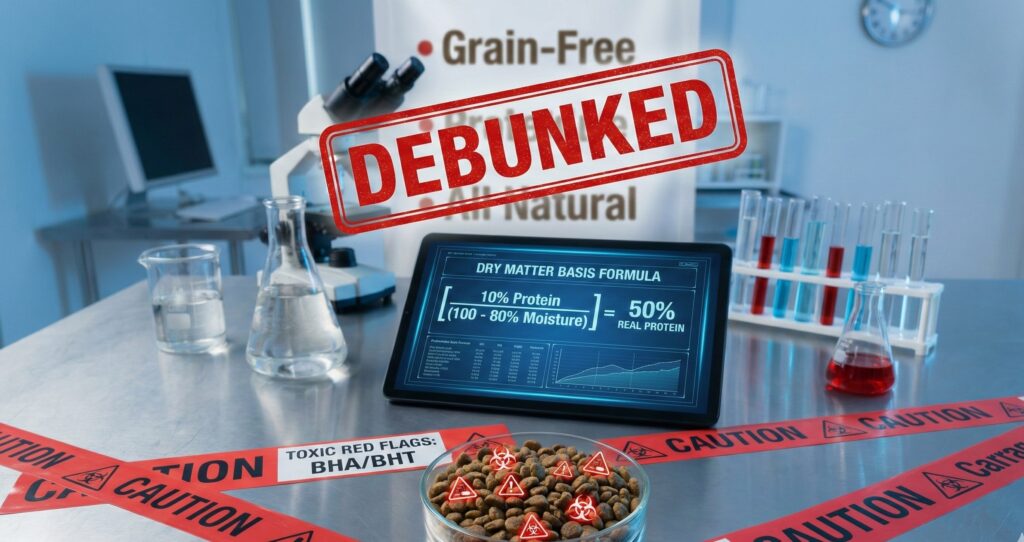
Wet food labels often list 10% protein, while dry food lists 30%. Because wet food is 80% water, you must calculate the Dry Matter Basis to see the real nutritional value.
The Formula:
In reality, this wet food contains 50% protein—significantly higher than the 30% protein found in a bag of dry kibble.
5. Debunking “Empty” Marketing Buzzwords
- Natural: This only means the ingredients were not chemically synthesized. It is not a guarantee of safety or nutritional quality.
- Human-grade: This has no legal definition in pet nutrition. It simply means the ingredients were handled in a facility that also processes human food.
- Grain-free: Often a marketing trap. Manufacturers frequently replace grains with high amounts of peas or potatoes. High carbohydrate intake—regardless of the source—is a primary driver of feline obesity and diabetes.
The ReviewByBuyer Verdict
A transparent label always begins with a named animal protein (e.g., “Deboned Turkey”) and is free from chemical preservatives. Ignore the photos of fresh steaks on the packaging; turn the bag over and analyze the ingredient list with a skeptical eye.
You might also like: Unboxing a New Laptop? Here’s My 7-Step Pro Checklist to Avoid a “Lemon” in Buying Guide Category