
I remember the gut-punch feeling when I walked out to the driveway and saw that long, jagged white line running across the driver-side door of my black truck. My son had been a little too eager to get his mountain bike out of the garage, and well—metal handle meets clear coat, and the clear coat loses every single time.
If you take pride in what you drive, a scratch like that isn’t just a blemish; it’s an eyesore that stares at you every time you reach for the door handle. It makes the whole car look neglected. I’ve spent years in the lab testing every “miracle” scratch remover that hits the shelves, and most of them are honestly just fancy fillers that wash away after the first rain.
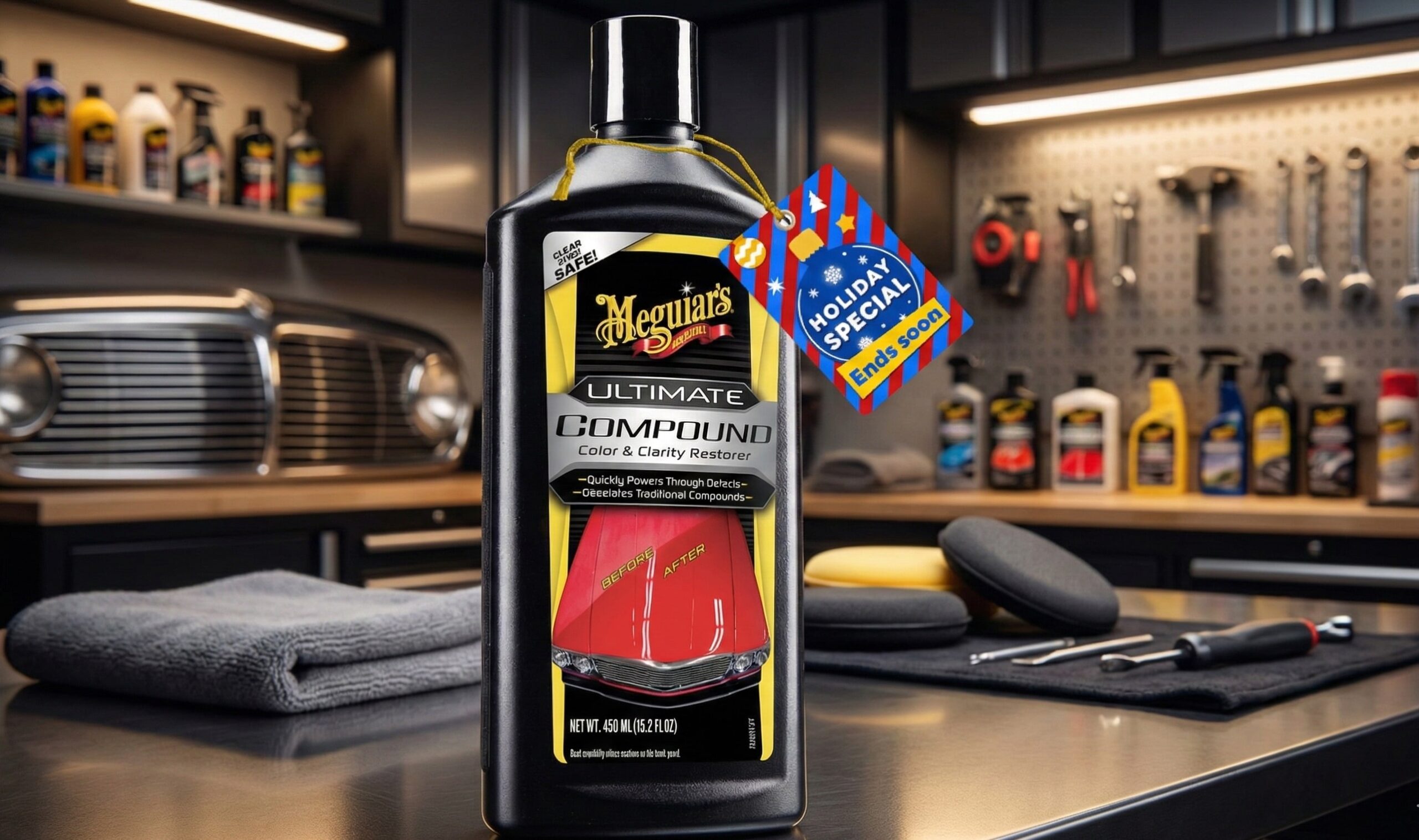
But Meguiar’s Ultimate Compound is a different beast. It’s been a staple in my detailing cabinet for years, but for this review, I wanted to take a fresh look at it through the lens of a real-world disaster. My team and I put it through a grueling series of tests on oxidation, swirl marks, and that infamous bike scratch to see if it’s still the king of the driveway.
If you’re looking for honest consumer insights, you’ve come to the right place. Let’s get into the grit of paint correction.
Advertising Disclosure
This video was generated by NotebookLM, summarizing the content of this blog post
The Science of “The Cut”: Why This Isn’t Your Grandpa’s Rubbing Compound
Back in the day, “rubbing compound” was essentially liquid sandpaper. If you weren’t careful, you’d burn right through your clear coat and be looking at bare metal before you could say “oops.” Meguiar’s changed that game with what they call Micro-Abrasive Technology (SMAT).
My lab team spent the afternoon analyzing the finish under a 10x jeweler’s loupe after using it. Traditional compounds leave behind their own tiny scratches (called hazing) that you have to spend hours polishing out later. This Ultimate Compound is engineered to stay consistent as you work it. It “cuts” the defect but finishes so cleanly that, in many cases, you don’t even need a follow-up polish.
For someone like me who values their Saturday afternoons, that means less time sweating over a fender and more time actually enjoying the car.
Performance: The “Elbow Grease” vs. The Machine
We tested this two ways: the “Old School” hand-buff and the “Pro” Dual Action (DA) Polisher.
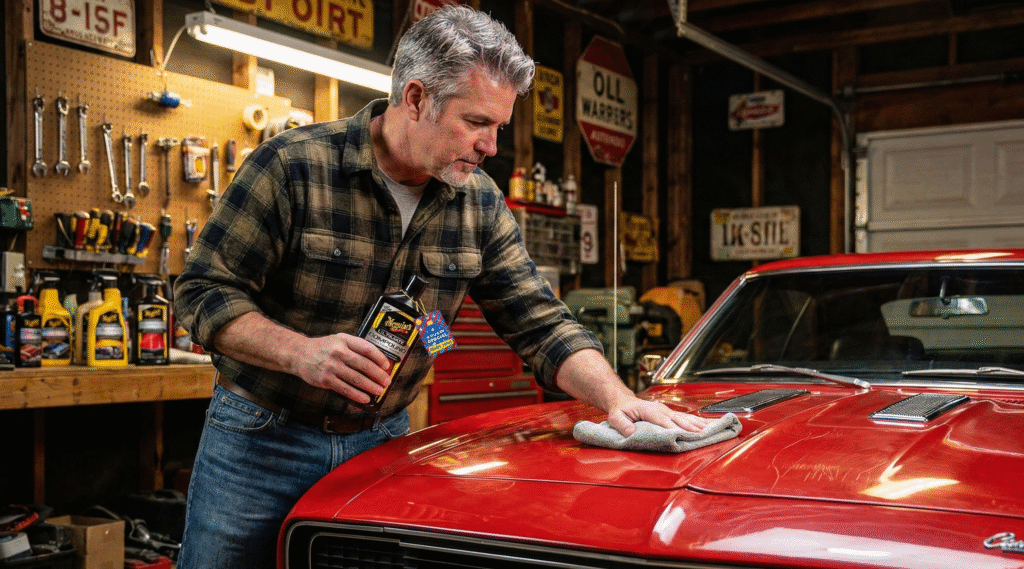
- By Hand: This is how most of us handle a spot-repair. It takes some effort, but for that bike scratch on my truck, it was a miracle worker. I used a foam applicator pad and worked in circular motions with firm pressure. After about three minutes, the “white” of the scratch disappeared. What was left was a smooth surface where the light no longer caught the edge of the damage.
- By Machine: If your whole car is covered in those “spider web” swirl marks from years of automatic car washes, you need a machine. My team treated the hood of a neglected SUV, and the results were startling. It stripped away the hazy oxidation and brought back a deep, “wet” look to the black paint that made it look years younger.
Comparison: Where Does This Fit in Your Detailing Routine?
One of the biggest mistakes I see people make is using the wrong tool for the job. Here is how my team breaks down the hierarchy of paint care:
| Step | Product Name | Primary Goal | Aggression Level |
|---|---|---|---|
| Correction | Ultimate Compound | Remove Scratches/Swirls | High (Leveling) |
| Polishing | Ultimate Polish | Max Gloss & Depth | Low (Refining) |
| Protection | Ultimate Liquid Wax | Seal & Protect | None (Sealing) |
Personal Field Test: The “Truck Bed” Challenge
I have an F-150 that I use for actual work—hauling lumber, gear, and the kids’ sports equipment. The top of the bed rails were dull, hazy, and covered in light scratches from sliding gear in and out.
My wife watched me walk out with a bottle of Ultimate Compound and a microfiber towel. She thought I was wasting my time on “work truck” paint. I spent ten minutes on a 2-foot section of the rail. The oxidation—that chalky, white film that makes paint look dead—came off onto the towel almost instantly. What was left behind was the original Ruby Red Metallic paint, shining with a clarity that matched the rest of the truck.
This is why my team and I trust this bottle: it makes you look like a pro even if you’ve never touched a polisher in your life. It’s forgiving, it’s fast, and it doesn’t leave you with a hazy mess.
Pros & Cons
The Good
- Safety First: It is very hard to “mess up” your paint with this if you are working by hand. It’s designed to be safe for all glossy clear coats.
- Clarity: Unlike cheaper compounds that leave the paint looking foggy, this finishes with a high level of gloss.
- Cost: One bottle can handle several full-car corrections or years of spot-scratch removals.
- Versatility: My team also uses it to clear up foggy plastic headlights with great success.
The Not-So-Good
- Dusting: If you work in direct sunlight or work the product for too long, it can get a bit “dusty,” which requires a quick wipe-down.
- Effort: If you aren’t using a machine, be prepared for a workout. Real paint correction requires friction.
- Limit: It won’t fix a scratch that has gone through the paint to the primer (the “fingernail test” rule applies here).
FAQ: Common Driveway Questions
Do I need to wax the car after using this?
Will it remove bird dropping stains?
Can I use this on a matte paint finish?
Final Recommendation: Who Is This For?
If you take pride in what you drive but you don’t want to spend $500 at a professional detailing shop for every light scratch, Meguiar’s Ultimate Compound is mandatory for your garage.
It’s for the person who wants to fix a mistake before it becomes a permanent eyesore. It’s for the enthusiast who wants their weekend driver to pop under the lights at a local car meet. And it’s for anyone who realizes that a little bit of maintenance today prevents a massive depreciation in your car’s value tomorrow.
Check out our professional buyer guides for more gear that actually works for real-world car owners.
Ready to bring back that showroom shine? Check the current price of Meguiar’s Ultimate Compound on Amazon here.
YOU MIGHT ALSO LIKE: YKYI Cordless Pressure Washer Review in Automotive Products