
There is a specific kind of silence that happens when your engine cuts out on a deserted stretch of highway at night. It’s heavy, it’s cold, and it immediately sets off a mental checklist of every “I’ll do it next weekend” task you skipped. As a father and a professional reviewer who has spent years dissecting gear, I’ve realized that a car emergency kit isn’t a “nice-to-have” accessory—it is the line between a minor inconvenience and a genuine family crisis.
I remember a few years back, my wife was driving home in a torrential downpour when a tire blew. She opened the “budget” kit we had at the time, only to find the flashlight was DOA and the jumper cables were so thin they looked like headphone wires. That was the day I stopped trusting marketing blurbs and started testing these things in the mud.
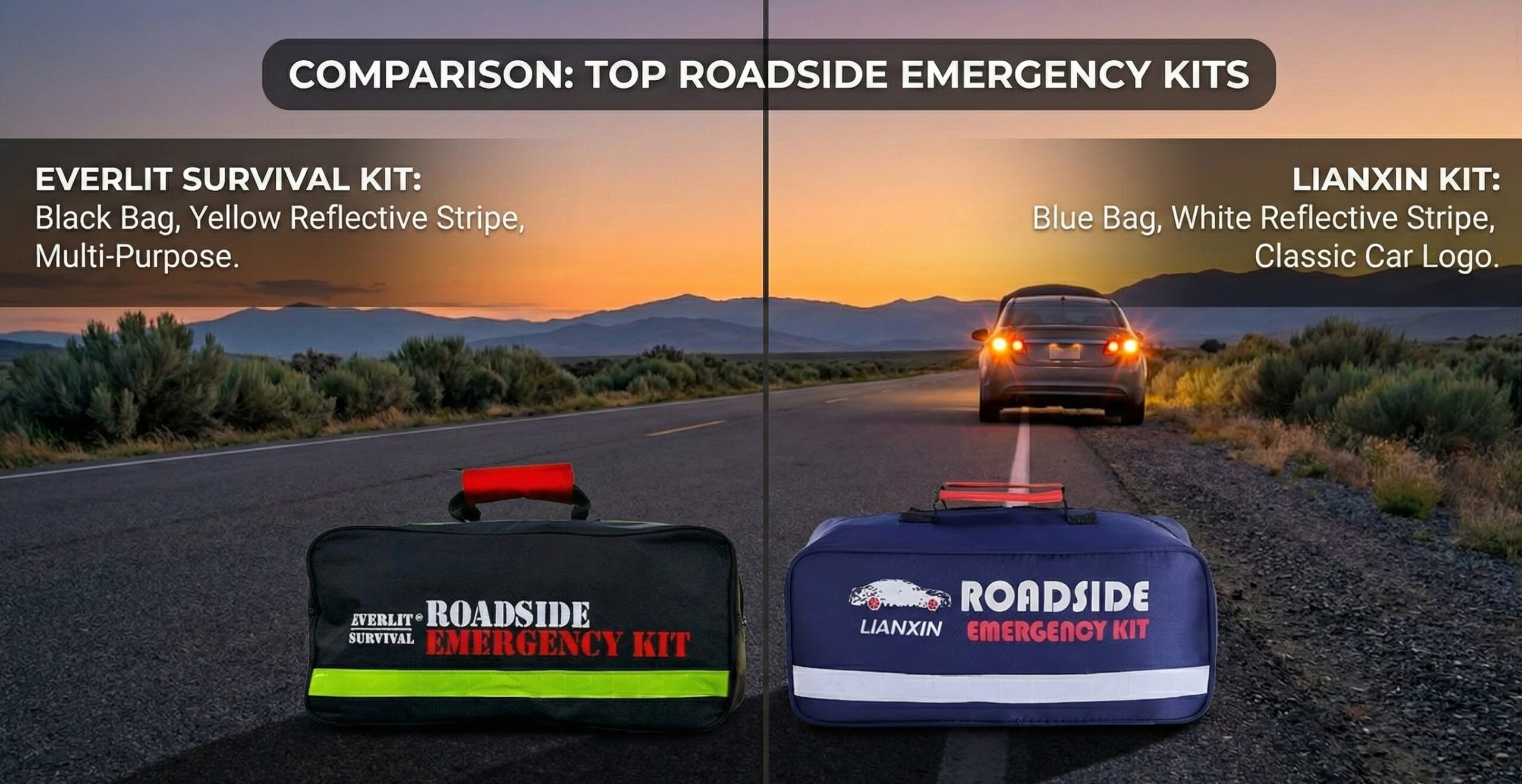
Today, we are looking at two heavy hitters the Everlit Survival Car Emergency Kit and the Roadside Assistance Emergency Kit (142 Pieces). One claims to be a survivalist’s dream with a digital compressor; the other promises safety through sheer volume. My team and I at the lab have spent dozens of hours pulling, pumping, and jumping with these kits to give you the truth. If you’re looking for honest consumer insights, you’re in the right place.
Advertising Disclosure
This video was generated by NotebookLM, summarizing the content of this blog post.
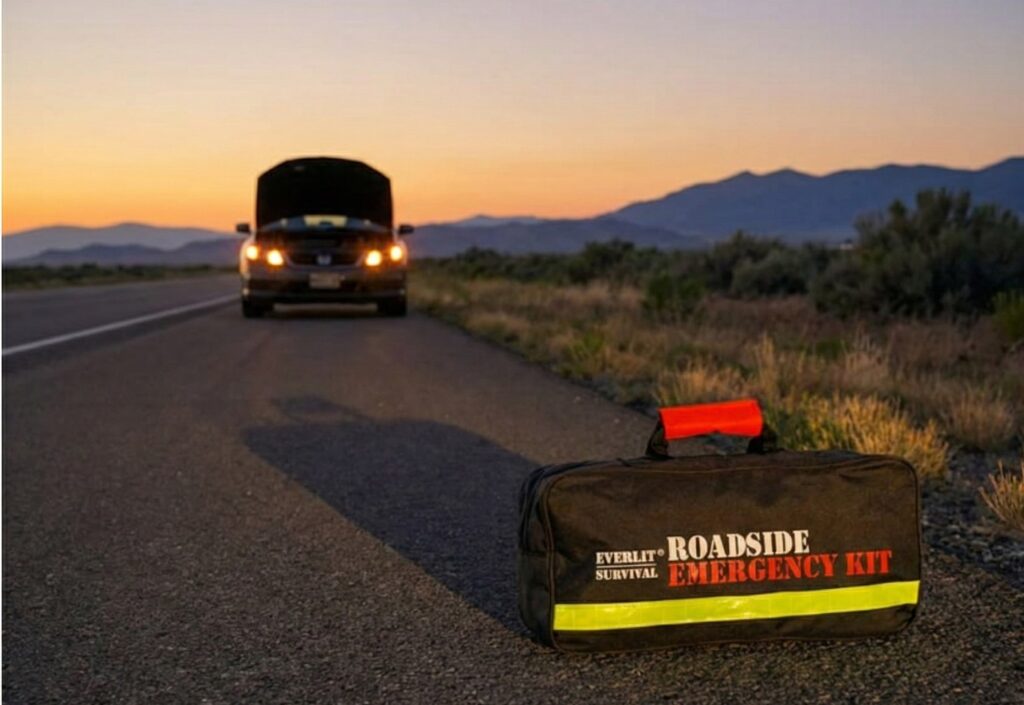
Everlit Survival Kit: The High-Tech Roadside Companion
When the Everlit Survival Kit arrived at our lab, the first thing my team noticed was the weight. It feels substantial. This kit isn’t trying to win a “most pieces” award; it’s trying to win the “most useful” award.
1. The Digital Air Compressor (The MVP)
Let’s be real: you are ten times more likely to deal with a low-tire pressure warning than a dead battery. Most kits give you a manual gauge or, worse, nothing at all. Everlit includes a Digital Auto Air Compressor.
- The Lab Test: We took a standard SUV tire down to 10 PSI. The Everlit pump is surprisingly intuitive. You set your desired PSI, hit start, and it stops automatically. It took about 6 minutes to get back to 32 PSI.
- My Take: It’s quiet, it doesn’t vibrate across the pavement like a panicked turtle, and the digital screen is bright enough to read in a midnight storm. For my daughter or son, this is a massive safety feature because it removes the guesswork of manual pumping.
2. The Jumper Cables (Length Matters)
Everlit provides 12-foot, 8-gauge cables.
- The Reality: Most cheap kits give you 8-foot cables. If you are stuck on a narrow shoulder with a wall on one side, you can’t always get the donor car nose-to-nose. Those extra 4 feet are the difference between getting a jump and being stranded.
- Performance: My team jumped a cold-start V6 engine using these. The clamps have a “bite” that doesn’t slip off the terminals—a small detail that matters when your hands are numb from the cold.
3. Medical-Grade First Aid
Everlit’s background is in tactical and military medical supplies. Their 108-piece first aid kit isn’t just a bag of band-aids. It includes actual trauma supplies. While I hope you never need the heavy-duty stuff, having it tucked away gives a level of peace of mind that a basic kit just can’t match.
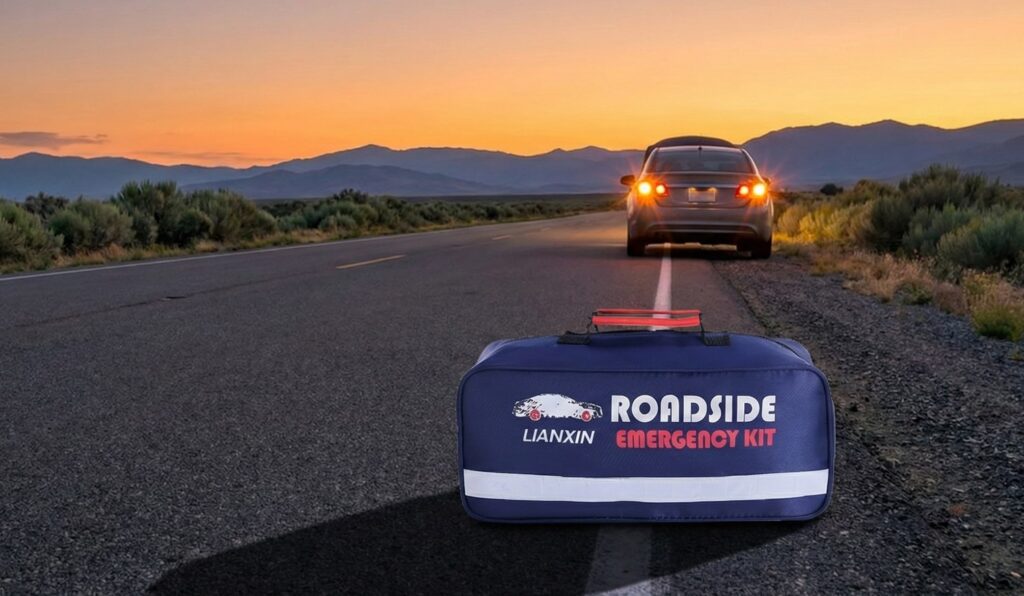
142-Piece Roadside Kit: The Visibility Powerhouse
The Roadside Assistance Emergency Kit takes the “more is more” approach. At 142 pieces, it feels like you’re carrying a small hardware store in your trunk. While some of those pieces are small fillers (zip ties, safety pins), the core of the kit focuses on being seen.
1. Night-Time Visibility (The Safety Winner)
If your car dies on a blind curve, your biggest threat isn’t the car—it’s the other drivers. This kit includes a reflective warning triangle and a high-visibility vest.
- The Lab Test: We set the triangle up in a 15-mph wind. It’s stable and catches light from 300 yards away.
- My Take: In a breakdown, I want my family wearing that vest and that triangle placed 50 feet behind the car. Everlit is surprisingly weak in this department, only offering basic glow sticks. If visibility is your main concern, this kit wins.
2. The Tool Variety
You get a multi-tool, a hammer/escape tool, and a functional tow strap.
- Performance: The tow strap is rated for 10,000 lbs. We hooked it up to a stalled sedan and gave it a tug. The hooks are steel, not plastic-coated junk, and the strap didn’t show signs of fraying under tension.
- The Experience: The tools are “emergency grade.” They aren’t meant for a full engine rebuild, but for tightening a loose battery terminal or a hose clamp, they are perfectly adequate.
The “Nick Anderson” Comparison Table
| Category | Everlit Survival Kit | 142-Piece Roadside Kit |
|---|---|---|
| Core Philosophy | Power & Medical (Survival) | Visibility & Tools (Assistance) |
| Flat Tire Support |
Digital Compressor Excellent Performance |
None Pressure Gauge Only |
| Visibility Gear |
Low Priority Glow sticks/Flashlight |
High Visibility Focus Triangle, Vest, Headlamp |
| Jumper Cables |
12ft / 8 Gauge Top Tier Quality |
Standard Heavy Duty Good Reliability |
| Medical Quality |
Comprehensive Trauma Grade First Aid Focus |
Basic “Band-Aid” Grade Minor Scrapes Only |
Lab Stress Tests: Beyond the Packaging
1. The “Winter Trunk” Test
We left both kits in a freezer at 0°F for 48 hours to simulate a Chicago winter.
- Everlit: The air compressor’s plastic casing became slightly brittle, but the motor turned over and worked immediately. The 12ft cables remained flexible enough to untangle without snapping—a huge plus.
- 142-Piece Kit: The cheaper plastic items (like the zip ties and the small tool case) felt like they might crack if dropped. However, the tow strap and the visibility triangle were unaffected.
2. The “Helpful Stranger” Test
If someone stops to help you, they usually have the muscle but not the gear.
- The 142-piece kit is great for this. You can hand a stranger the tow strap or the multi-tool, and they can get to work.
- The Everlit kit is more about self-sufficiency. You don’t need a stranger if you have the compressor and the jumper cables yourself.
Pros & Cons: The Brutal Truth
Everlit Survival Kit
- The Good: The digital compressor is a game-changer for solo drivers; the 12ft cables are professional grade; the first aid kit is actually useful in a real injury.
- The Bad: It’s missing a reflective triangle (which is a major safety oversight); it’s more expensive than the “volume” kits.
142-Piece Roadside Kit
- The Good: Incredible visibility for nighttime safety; you get a lot of tools for the money; the tow strap is better than expected.
- The Bad: No tire inflator means you’re still stranded if you have a slow leak; many of the “142 pieces” are tiny fillers you’ll likely never use.
FAQ: Roadside Reality Check
Which kit is better for someone who isn’t ‘car-savvy’?
Do these kits work for heavy-duty trucks?
Can I leave these in the trunk all year?
Final Recommendation: Which One Wins?
This isn’t just about “which kit is better”—it’s about which kit fits your life.
- The Winner for My Family: The Everlit Survival Car Emergency Kit. If my wife or my kids are stuck, I want them to have that digital air compressor and those long jumper cables. It focuses on the high-probability failures that actually happen on American roads. I’d just suggest buying a separate $15 warning triangle to throw in the bag.
- The Winner for the Prepared DIYer: The Roadside Assistance Emergency Kit (142 Pieces). If you already have a portable pump and you just want the manual tools, the tow strap, and the excellent visibility gear, this is the better bargain. It’s a great “base” kit to build upon.
Don’t wait until you’re staring at a dead dashboard in the rain to decide you need a safety kit. It’s the cheapest insurance policy you’ll ever buy for your family.
Check out our professional buyer guides for more gear that actually works for real-world car owners.
YOU MIGHT ALSO LIKE: 5 Best Car Cleaning Gels in Automotive Products