
For expectant or new parents in the U.S., buying a car seat is often the most stressful shopping decision. You walk into a store or visit a website and are immediately overwhelmed by hundreds of options, with prices ranging from $50 to over $500. Your psyche is torn between the burning desire to buy the “safest” thing for your child and the confusion over technical terms, seat types, and seemingly endless features.
But what if I told you that the $500 seat isn’t necessarily safer than the $150 seat in a crash? What if the most important factor determining your child’s safety isn’t the price tag, but something else entirely? Welcome to the core paradox of buying a car seat in America.
Market Context: You’re Not Alone in This “Matrix”
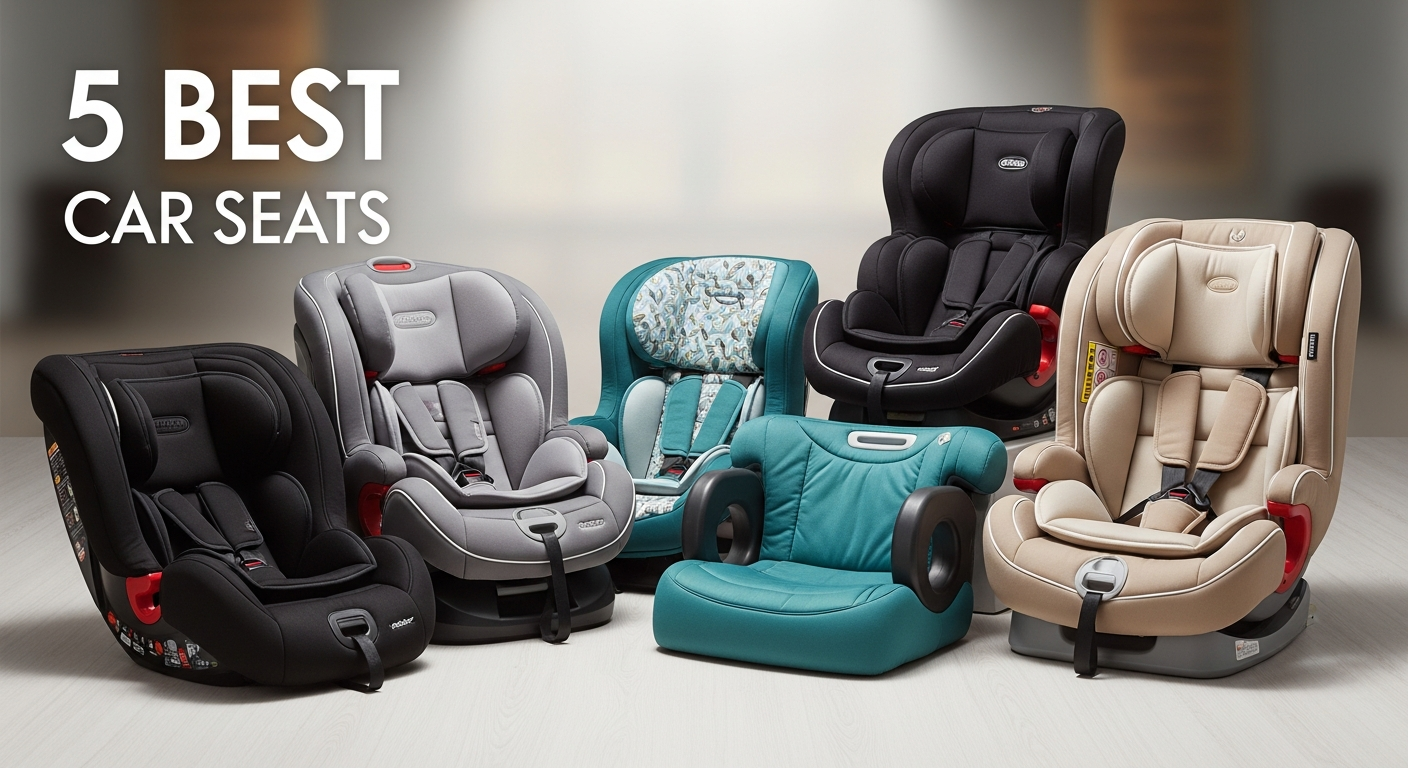
If you feel overwhelmed, that’s normal. The U.S. child car seat market is a massive industry, and walking into a store (or visiting a website) is like stepping into a maze. A barrage of products hits your eyes, all promising “safety” and “convenience.” To simplify, this market is basically divided into four main types:
- Infant Seats: The first portable seat, used only rear-facing, and detachable from a base.
- Convertible Seats: A “fixed” seat that can be used rear-facing and then “converts” to forward-facing as the child grows.
- Booster Seats: For older children, using the vehicle’s seat belt.
- “All-in-One” Seats: The “buy once” seat that promises to go from newborn to booster.
The current trend is that parents increasingly favor convertible and all-in-one types, hoping to buy once and use it for the long haul.
The Key Information: The Core Safety Paradox
This is the most important truth every American parent needs to understand. In theory, safety is the number one priority. Car accidents are one of the leading causes of death for children. But all car seats sold legally in the U.S. must pass strict minimum federal safety standards.
This leads to a surprising truth:
What Child Passenger Safety Technicians (CPSTs) constantly stress is that a seat is only safe if it is used correctly. The problem is, the vast majority of parents and caregivers are using their seats incorrectly. Common mistakes include installing the seat too loosely or not using the harness correctly.
This leads to the core paradox: the best predictor of real-world safety is not the price, but how easy it is to install and use correctly. Therefore, experienced parents and CPSTs prioritize “ease of use” features, not out of laziness, but because they directly minimize the risk of human error.
Secondary Influencing Factors
Once you understand that “easy to use” is a safety feature, the following factors will influence your decision:
- Vehicle Compatibility: This is a major hurdle. A 2022 survey found that 58% of parents said whether a car seat fit influenced their vehicle purchase decision. SUVs are often preferred for their spacious interiors.
- Ease of Cleaning: Kids are messy. Therefore, a top factor parents care about is finding seats with the “easiest cover to remove for machine washing.”
- Long-Term Value (Marketing vs. Reality): “All-in-One” seats promising “10 years of use” are very appealing. However, many experienced parents provide feedback that after 5-7 years, the seat will be very dirty, and buying a new, clean booster is more practical.
- Portability (Infant Seats): For infant seats, the weight of the carrier and compatibility with a stroller are extremely important.
Safety Standards: Decoding FMVSS and NHTSA
- FMVSS 213 (Federal Standard): This is the minimum legal requirement in the U.S. It’s essentially a “Pass/Fail” system. It doesn’t tell you how much seat A passed the standard by compared to seat B. New standards (FMVSS 213a) will require stricter side-impact testing for seats manufactured after June 30, 2025.
- NHTSA 5-Star Ratings: This is a major point of confusion. The 5-star rating from the National Highway Traffic Safety Administration (NHTSA) does not rate crash performance. Instead, it only rates “Ease of Use”. This reinforces the core paradox: the government also recognizes that ease of installation is a critical safety factor.
The Best Products on the Market (2024-2025)
Here are the standout products, evaluated based on a combination of crash performance (from independent labs) and ease of use (from CPST and consumer feedback).
| Car Seat Model | Seat Type |
|---|---|
| Graco Slimfit 3-in-1 Convertible Car Seat | Convertible |
| Graco 4Ever DLX 4-in-1 | All-in-One |
| Graco Extend2Fit | Convertible |
| Chicco KeyFit 35 | Infant |
| Britax Poplar S | Convertible |
Advertising Disclosure
1. Britax Willow S
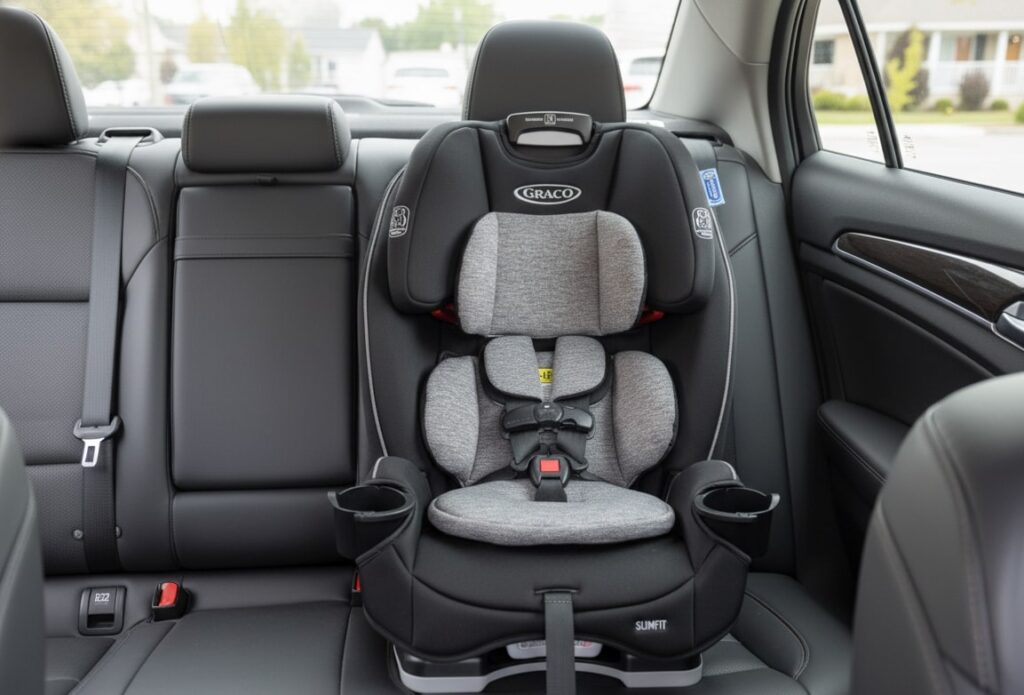
- Type: Infant Seat
- Pros: This seat is a top-rated budget option that still includes premium features. Its main advantage is the “foolproof” ClickTight installation system, which makes getting a secure fit much easier. It also includes an anti-rebound bar (called the ReboundReduce Stability Bar) for added safety. It’s considered easy to install and provides a good, safe fit for newborns and even preemies. It is also designed to be part of a travel system and is compatible with strollers.
- Cons: The primary limitation is that its maximum weight is 30 pounds, whereas many competitors in this class go up to 32 or 35 pounds. This means a child might outgrow it slightly faster.
2. Graco 4Ever DLX 4-in-1
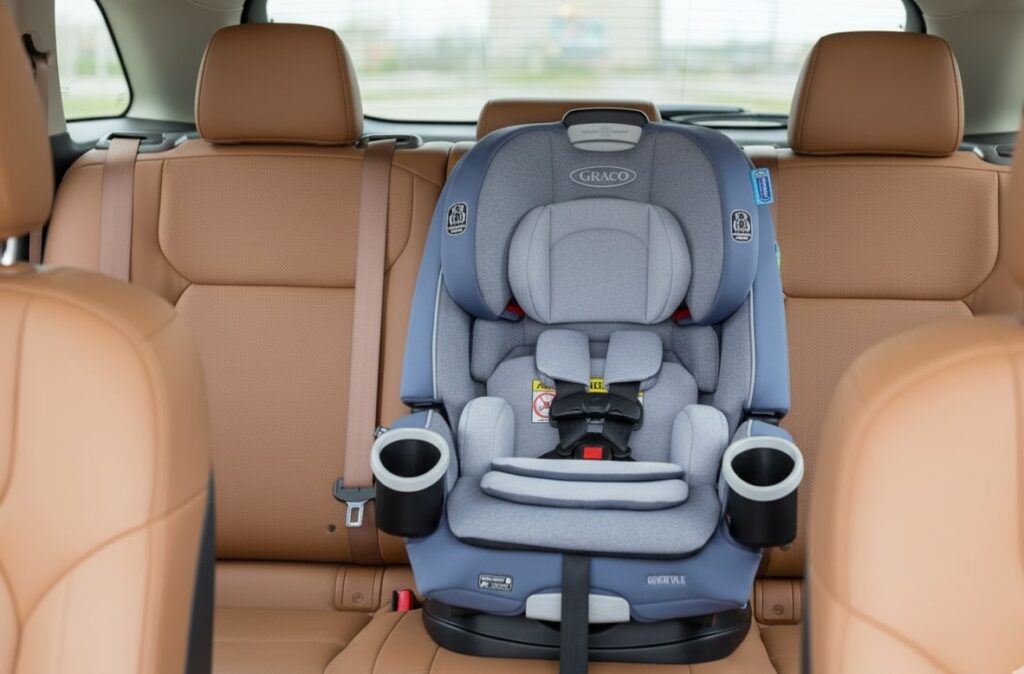
- Type: All-in-One
- Pros: This is a massive bestseller, primarily because it offers incredible value with its “10 years of use” promise. It is a true 4-in-1, seamlessly transforming from a rear-facing harness seat (4-40 lbs) to a forward-facing harness (22-65 lbs), then to a high-back booster (40-100 lbs), and finally to a backless booster (40-120 lbs). In independent lab tests, it scores very high for crash performance (8.7/10), making it one of the top performers in the convertible group. It’s packed with parent-friendly features that earn it high ease-of-use ratings: it has a 10-position “no-rethread harness” , an easy-to-remove cover , a harness that’s simple to tighten and release , and a built-in lock-off for forward-facing seatbelt installation. It’s also noted for fitting newborns well and being relatively easy to install with LATCH.
- Cons: Very bulky and heavy, not a good choice if you need to move it between cars. Some reviews note the fabric is a bit “rough” and there have been reports of fit issues with small newborns (causing “chin-to-chest” positioning).
3. Graco Extend2Fit
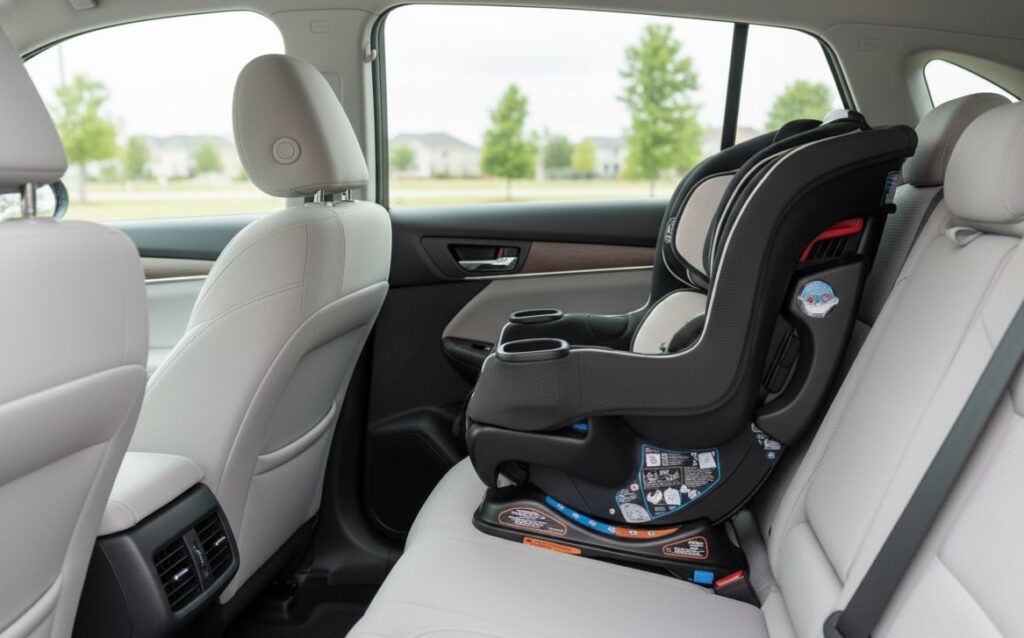
- Type: Convertible
- Pros: The number one reason to buy this seat is its exceptional Extended Rear-Facing (ERF) capability. This is its key selling feature: a unique 4-position extension panel slides out to provide extra legroom, allowing children to comfortably stay rear-facing up to the 50-pound limit , which is a significant safety benefit. It’s not just a parent-favorite; it’s the top pick from major reviewers like Wirecutter and a top value pick from testing labs precisely because it champions this safety feature at an affordable price. It also performs very well in independent crash tests, scoring an 8.5/10 , which is on par with much more expensive seats. It’s known for being relatively compact front-to-back (especially with the panel in), making it a great fit for smaller cars , and features a simple no-rethread harness with ten headrest positions.
- Cons: The most common feedback from users is that it’s difficult to install securely with a seatbelt and the seat’s harness straps are very hard to tighten.
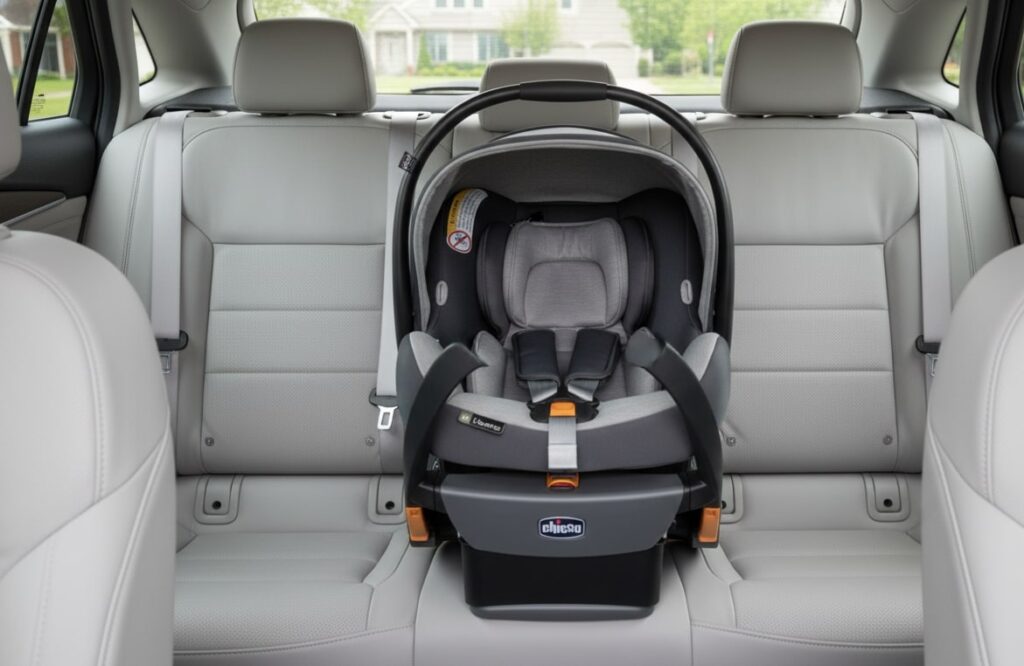
4. Chicco KeyFit 35
- Type: Infant Seat
- Pros: This seat is overwhelmingly loved by CPSTs and parents because it is “extremely easy to install” correctly. Its base is the star: it features a “SuperCinch” LATCH tightener, which is a force-multiplying system that gets the base secure with just a light tug. This is paired with a “ReclineSure” spring-loaded leveling foot and bubble-level indicators to ensure the angle is perfect every time, making the installation “almost foolproof.” The “35” model is a major upgrade from the classic KeyFit 30, adding a premium anti-rebound bar for stability and, most importantly, a “no-rethread harness” that adjusts the headrest and harness height together. It also offers extended use, fitting children up to 35 lbs and 32 inches , and includes nice comfort features like premium cushioning and a UPF 50+ canopy.
- Cons: The fabric and headrest padding are considered a bit “rough” by some reviewers and parents compared to premium brands. There have been a few reports of the seat appearing to cause the infant’s chin to drop to their chest.
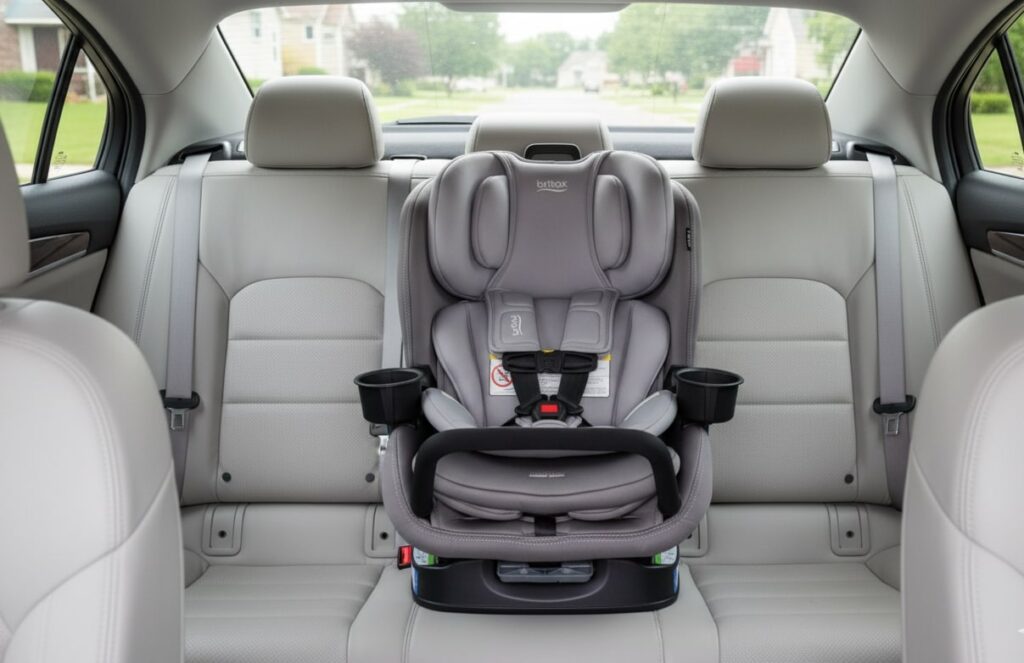
5. Britax Poplar S
- Type: Convertible
- Pros: This seat is specifically engineered to solve the problem of space. At only 17 inches wide, it is one of the narrowest convertibles on the market, making it the top choice for fitting “3-across” in the backseat or for use in smaller cars. It’s also exceptionally compact from front-to-back, which preserves valuable legroom for the driver and front passenger. Its standout feature is the patented “ClickTight” installation system. This system allows you to open a panel on the seat, route the car’s seatbelt through a simple color-coded path, and then close the panel, which automatically tensions and locks the seatbelt for a “rock-solid” installation in under a minute. The “S” model adds an anti-rebound bar for extra rear-facing safety. It also features high-quality, flame-retardant-free fabrics that are machine washable and dryable , a 10-year lifespan , and a no-rethread harness.
- Cons: Its crash test performance in independent tests was only “average.” The most common user complaint is that the cover is “hard to remove” for cleaning and the harness is difficult to tighten on small children (under 22 lbs).
IMPORTANT WARNING: Recalls and Safety Investigations (2024-2025)
Buying an expensive seat does not grant immunity from problems. What you must do: As soon as you buy a seat, register your product with the manufacturer. This is the only way they can contact you directly if there is a recall. You can always check the status of any seat on NHTSA.gov/recalls
Conclusion: The Truly “Safest” Seat
The “best” seat does not exist. The “safest” seat is the one that fits your child (by age, weight, and height), fits your vehicle, and is one you can install correctly every time.
Don’t buy an expensive seat with complicated features you find confusing. Instead, prioritize proven “ease of use” features (like Britax ClickTight or Chicco SuperCinch). Minimizing the risk of human error is the most practical way to increase your child’s safety.
5 Products to Buy Based on Buyer Persona
If you prioritize “Foolproof” Installation (The “Safety Paradox” Solution): This is our top recommendation for new parents overwhelmed by the “paradox.” To ensure correct installation, choose the Chicco KeyFit 35 for your infant. Its “almost foolproof” SuperCinch LATCH system is beloved by safety techs for removing guesswork. For a convertible, pick the Britax Poplar S for their “ClickTight” technology, which provides a rock-solid installation using the seatbelt in minutes.
If you prioritize the Safest Position (Extended Rear-Facing): If your research has led you to prioritize Extended Rear-Facing (ERF), the Graco Extend2Fit is your best choice. Its standout feature is the 4-position extension panel, which provides the legroom needed to keep your child in the safer rear-facing position up to 50 lbs—far longer than most competitors.
If you prioritize Long-Term Value (“One-and-Done” Shopping): If you want to buy one seat and be done, the Graco 4Ever DLX is the bestseller for this reason. It offers 10 years of life, converting from infant seat to backless booster. It combines this value with high independent crash-test scores and simple, easy-to-use features for day-to-day life.
If you prioritize Space (Need 3-Across or Have a Small Car): If your biggest challenge is simply fit, the Britax Poplar S is engineered to solve this. At only 17 inches wide, it is a top choice for fitting three car seats in a row or for use in a compact car, all while still including the “rock-solid” ClickTight installation system
Advertising Disclosure
FAQs
What is the most important factor in car seat safety?
The best predictor of real-world safety is ease of use. A car seat is only safe if it is installed and used correctly, which is where most errors happen. An easier-to-install seat minimizes the risk of human error.
Is a more expensive car seat safer?
Not necessarily. All car seats sold in the U.S. must pass the same federal safety standards (FMVSS 213). A higher price often pays for premium fabrics, convenience features, or easier installation, but not always more crash safety.
What are the main types of car seats?
There are four main types:
1) Infant Seats (portable, rear-facing only)
2) Convertible Seats (stay in the car, rear- and forward-facing)
3) Booster Seats (for older kids)
4) All-in-One seats (designed to cover all stages).
How do I check for car seat recalls?
Always register your car seat with the manufacturer. You can check for any recall by entering your seat’s model and manufacture date on the official National Highway Traffic Safety Administration (NHTSA) website: NHTSA.gov/recalls.
What is the ‘best’ car seat to buy?
There is no single ‘best’ seat. The ‘safest’ car seat is the one that fits your child (age, height, weight), fits your specific vehicle, and that you can install and use correctly every time.