When Taking Screens Away Isn’t the Answer — Giving Kids Something Better Is
At some point, most parents stop asking how much screen time is too much and start asking a harder question:
What can actually replace it?
Screens aren’t the real problem. They’re just incredibly good at filling empty space. If there’s nothing equally engaging waiting on the other side, kids will always drift back to them.
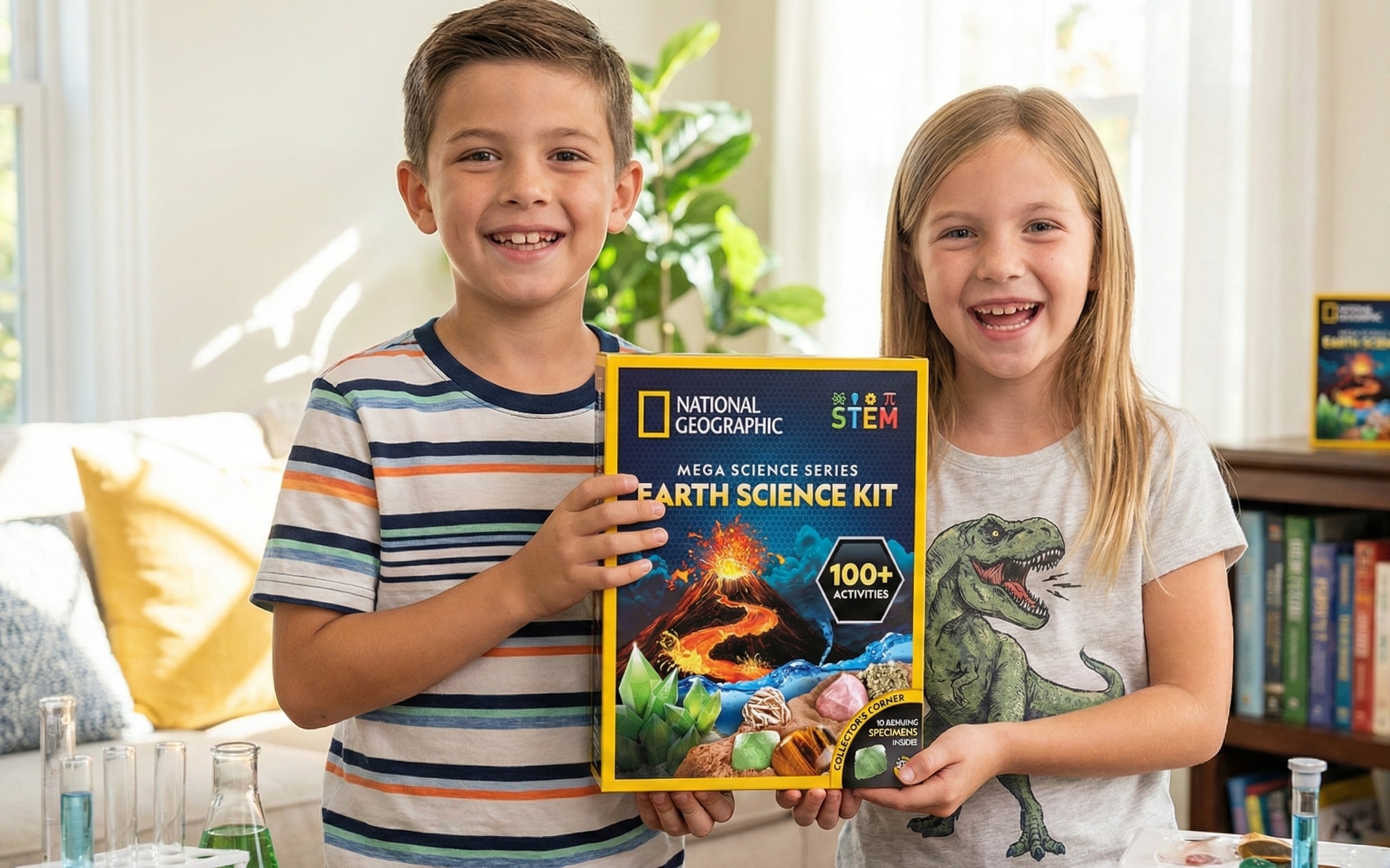
In our house, we have two kids in that in-between age where this struggle shows up clearly:
a daughter who’s 8 and a son who’s 10. Different personalities, different interests — but the same pull toward tablets and videos when boredom hits.
I didn’t buy the National Geographic Earth Science Kit to “teach science.”
I bought it because I was looking for an experience slow enough, real enough, and interesting enough to pull them away from screens without forcing the issue.
Advertising Disclosure
Why I Was Skeptical Before We Even Opened the Box
I’ve purchased plenty of “educational” kits over the years. Most of them promise curiosity, creativity, and learning — and then end up being exciting for about an hour before quietly disappearing into a closet.
So my expectations were intentionally modest.
This kit stood out for one reason: it doesn’t rely on apps, videos, or instant gratification. It’s built around observation, waiting, and hands-on discovery — three things screens almost never teach.
Still, I wondered: Would kids raised on fast feedback even tolerate something this slow?
First Impressions: A Calm Start That Didn’t Feel Like a Lesson
We opened the box together on a weekend afternoon. I didn’t frame it as schoolwork or a “learning activity.” I just said, “Let’s try an experiment.”
That wording mattered.
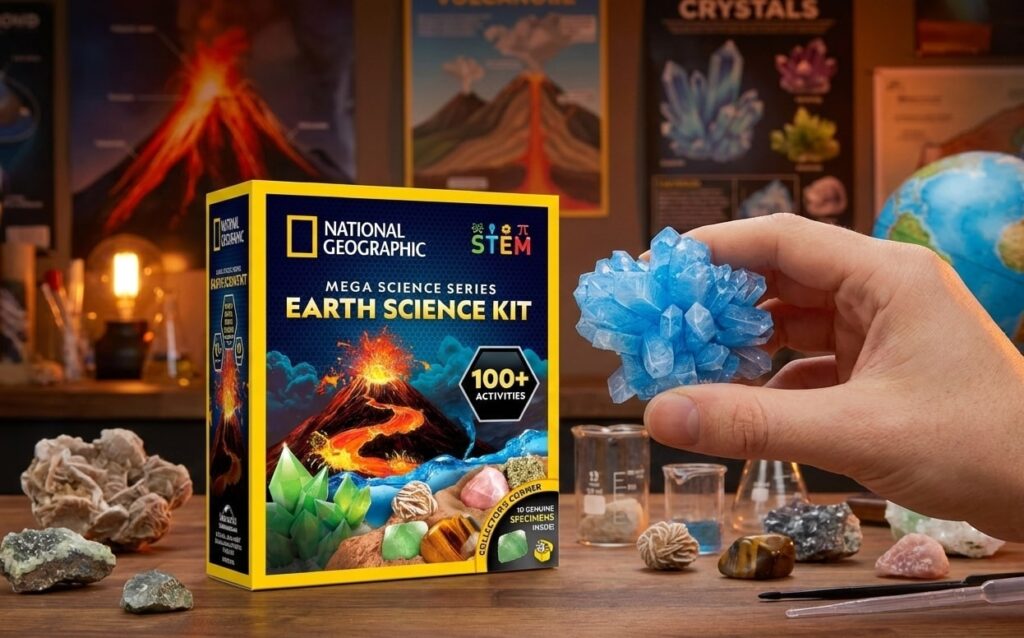
Inside were crystal-growing materials, tools, and illustrated instructions. Nothing flashy. Nothing overwhelming. Just enough structure to guide them, without taking over the experience.
What I appreciated immediately was how gender-neutral everything felt. No loud branding. No “this is for boys” or “this is for girls.” Just materials and a process.
That alone made it easy for both kids to lean in without hesitation.
Two Kids, Two Mindsets — One Shared Focus
The differences between my kids showed up almost instantly.
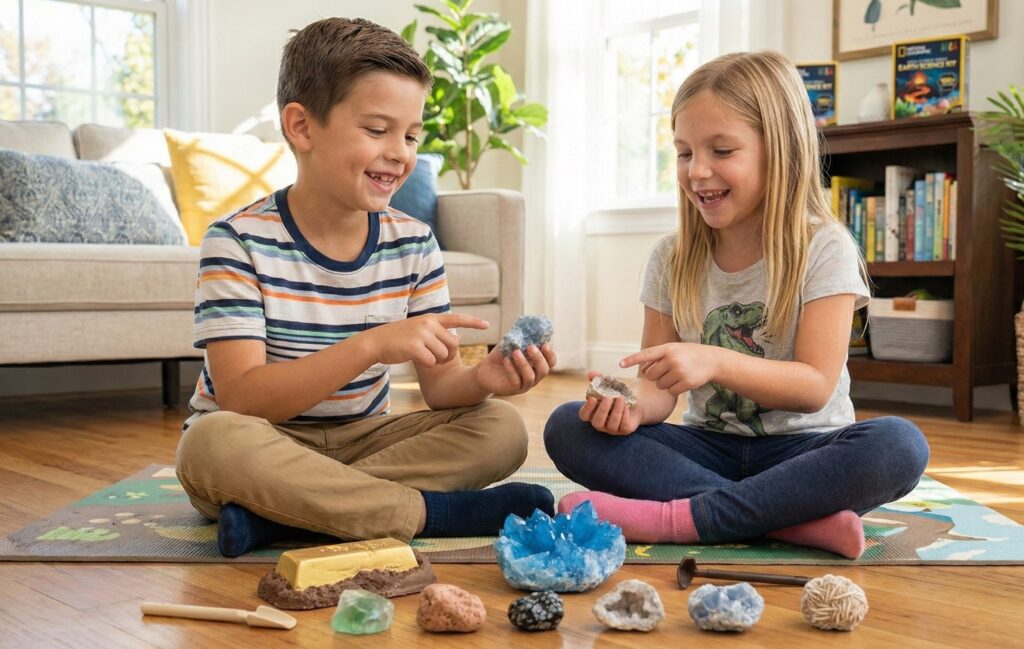
My daughter gravitated toward color and appearance. She cared about how the crystals would look, where they might be displayed, and whether they’d feel “special” when finished.
My son focused on steps and outcomes. He read the instructions carefully and wanted to understand what would happen if something went wrong — or right.
What surprised me wasn’t how different their approaches were, but how equally engaged they both stayed.
No one was rushing. No one asked for a screen “while we wait.” The process itself held their attention.
The Power of Slowness (And Why Screens Can’t Compete Here)
Crystal growth doesn’t happen instantly. And that’s the point.
This kit forces kids to wait, observe, and check progress over time. At first, I worried that delay would kill their interest. Instead, it did the opposite.
Every day, both kids wanted to check in. They noticed small changes. They compared what they saw yesterday to what they saw today. They made predictions.
That’s when I realized something important:
Screens don’t lose because they’re bad. They lose when real-world experiences become meaningful again.
No arguments. No rules. Just genuine curiosity replacing passive consumption.
STEAM Learning Without Feeling Like STEAM
I never explained STEAM concepts to them. I didn’t need to.
They were already living it:
- Science through observation and cause-and-effect
- Technology through following structured instructions
- Building / Engineering (B) through understanding process and precision
- Art (A) through color, form, and visual appreciation
- Math through time, comparison, and size differences
My daughter connected most with the Art side — treating the crystals like something personal and expressive.
My son leaned into the Building and logic — testing ideas and thinking about variables.
Same kit. Same experience. Completely different internal takeaways.
That’s what real STEAM looks like.
What This Taught Me as a Parent
My biggest takeaway wasn’t about crystals or science.
It was about my role.
The more I stepped back, the more they stepped forward.
Instead of explaining everything, I asked questions. Instead of correcting immediately, I let them notice outcomes. That created conversations far deeper than anything we’ve had after a video or game.
For parents interested in real-world, experience-based reviews like this, I often reference insights collected at Review by Buyer — a place focused on lived use, not just product descriptions.
Is This for Boys or Girls? The Question Misses the Point
People still ask this, and I understand why. But after watching both my kids engage fully, the answer feels obvious.
This kit isn’t for boys or girls.
It’s for curious kids.
What matters more than gender is how adults introduce it. Frame it as discovery, not difficulty. Exploration, not instruction. Kids will meet it where it is.
Weeks Later: What Actually Lasted
The crystals eventually finished growing. Some are displayed. Some are stored away.
But what stayed was more important:
- A willingness to slow down
- Pride in creating something real
- Comfort with waiting for results
Those aren’t things screens teach well — and they’re exactly what kids need more of.
Realistic Downsides Worth Mentioning
This isn’t an instant win. Kids used to constant stimulation may need a little time to adjust. And parents need to be present, especially at the beginning.
But if you’re looking for a “set it and forget it” toy, this isn’t it.
If you’re looking for a shared experience that quietly reshapes habits, it’s worth considering.
Final Thoughts From a Parent of Two Very Different Kids
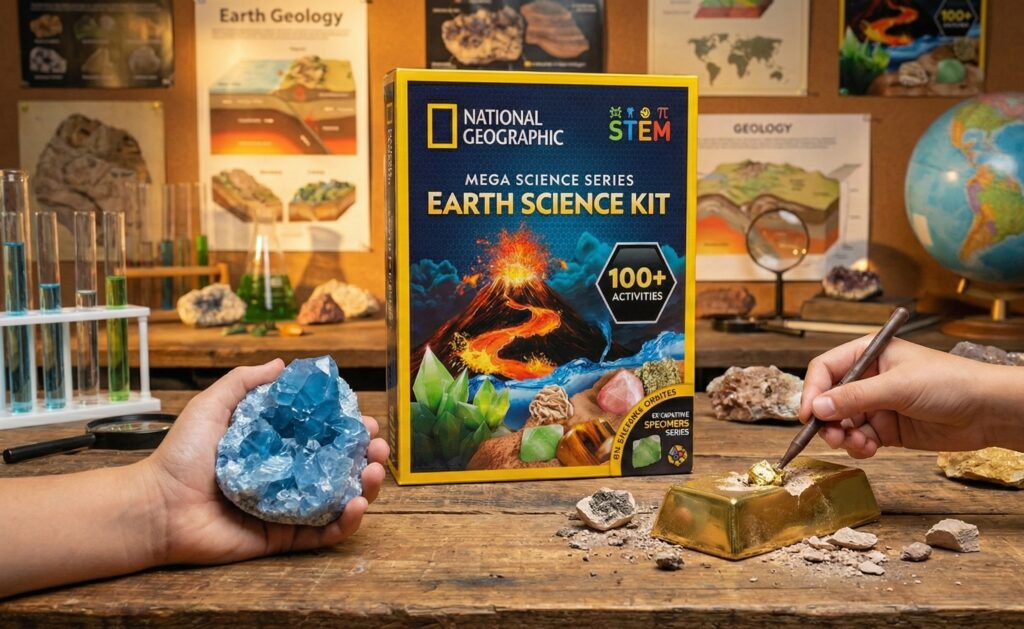
After experiencing this kit with both my 8-year-old daughter and 10-year-old son, I don’t see the National Geographic Earth Science Kit as just a science toy.
I see it as an alternative path — one that gently pulls kids away from screens by giving them something better to lean into.
No force. No lectures. Just curiosity doing the work.
This video was created using NotebookLM based on the review content from this blog
YOU MIGHT ALSO LIKE: Big Discoveries Dumpster Dice in Toys and Games Category