When My 8-Year-Old Started Living on Screens, I Knew I Needed a Different Kind of Toy
I’m a dad living in the United States with an eight-year-old daughter. I’m not anti-technology. Screens are part of modern childhood, and I accept that. But there was a point when I realized how quickly my daughter moved from one screen to another—tablet, TV, short videos—always entertained, but never really settled.
What bothered me wasn’t that she enjoyed screens. It was how short-lived that enjoyment felt. Turn the screen off, and the asking started again. I began wondering whether there were still toys that could hold her attention without flashing lights or instant rewards—something slower, quieter, and more personal.
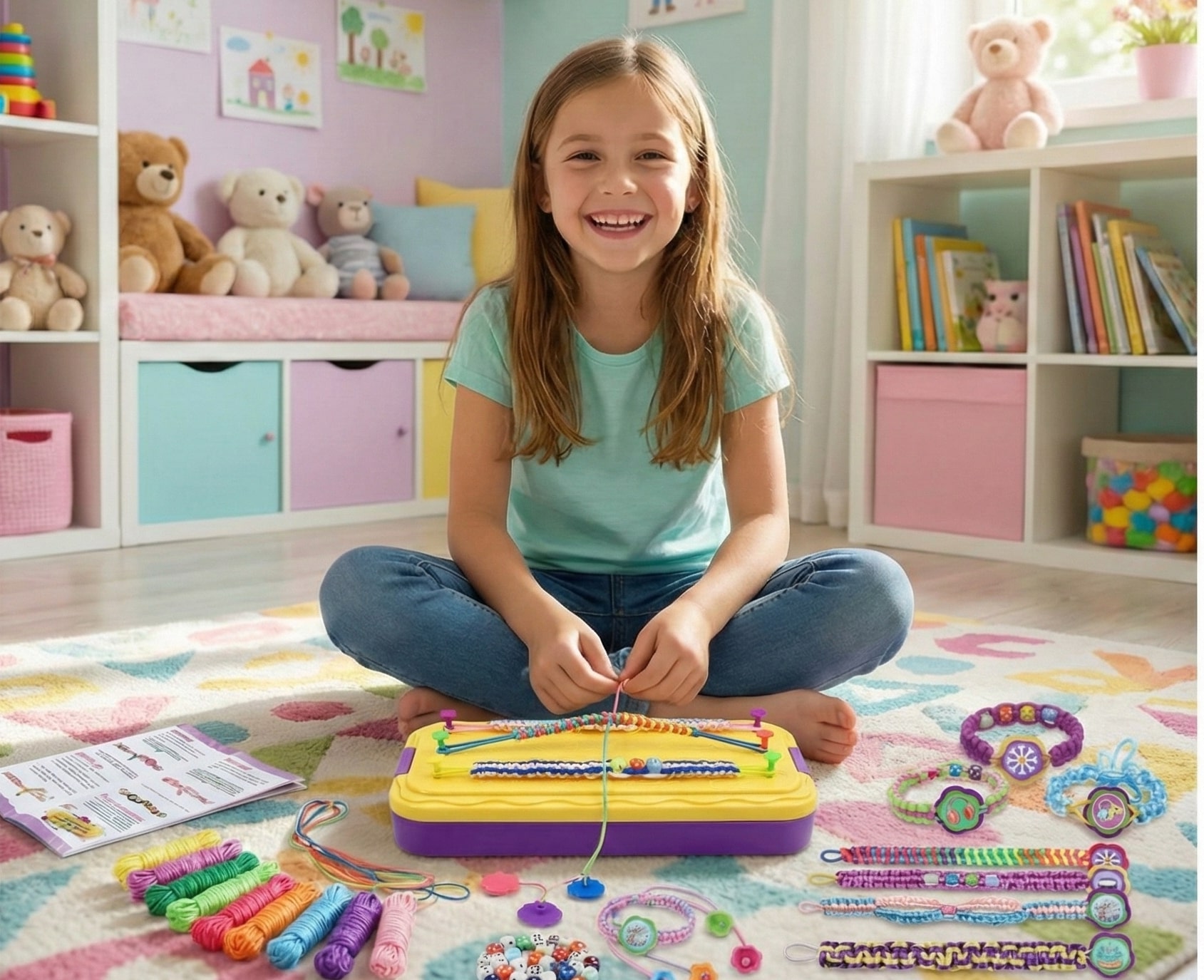
That question is what led me to try a Friendship Bracelet Kit. Not because I thought it would be perfect, and not because I believed the marketing. I tried it because it reminded me of the kinds of activities kids used to do with their hands—creating something step by step, without being rushed.
Advertising Disclosure
Why I Decided to Try a Friendship Bracelet Kit in the First Place
I’ve bought plenty of DIY kits over the years. Some were exciting for one afternoon and never touched again. So when I ordered this bracelet kit, my expectations were modest. I wasn’t looking for an “educational breakthrough” or a toy that would magically replace screens.
I simply wanted to see how my daughter would react to an activity that required patience and creativity, without any built-in entertainment beyond the process itself.
What stood out to me about this kit was its simplicity. It focuses on one thing: making friendship bracelets by hand. No batteries. No apps. No instructions that tell kids exactly what the final product should look like. That simplicity felt refreshing.
Opening the Box: First Reactions Matter More Than Reviews
I always open new toys together with my daughter. Her first reaction usually tells me more than any online review ever could.
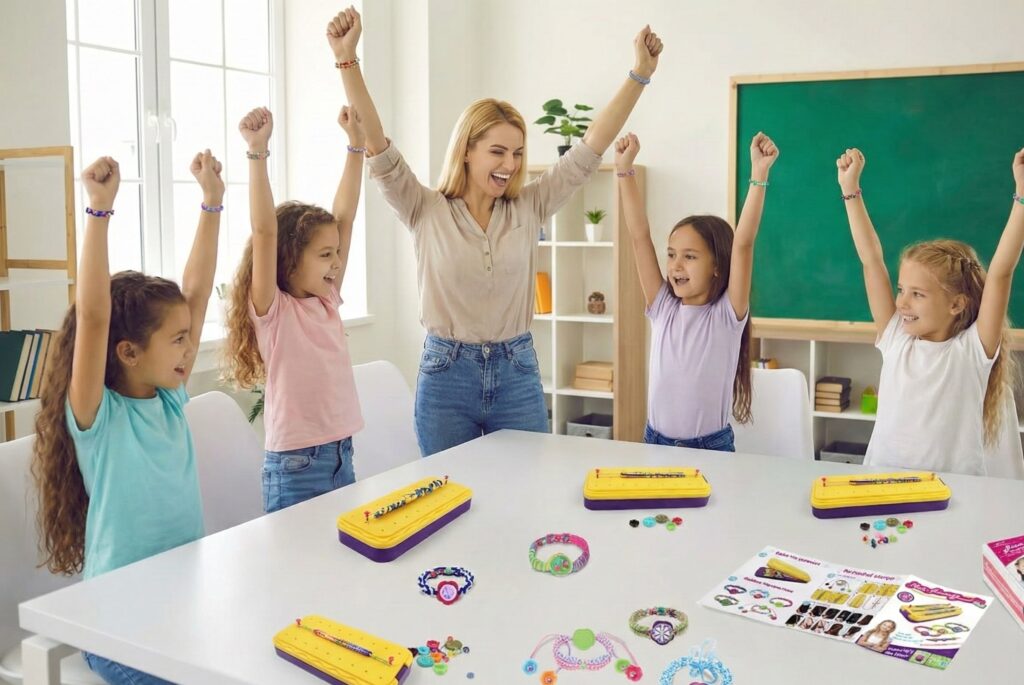
When we opened the box, she immediately noticed the colorful threads and small beads. Then she asked a question that surprised me:
“Can I make one for my best friend?”
That moment stuck with me. She wasn’t thinking about finishing fast or following rules. She was thinking about giving something she made herself.
From my perspective as a parent, the kit felt reasonably well organized. The materials weren’t tangled or overwhelming, and it didn’t feel like something designed to fall apart after one use. I wasn’t judging craftsmanship at a professional level—just whether it felt suitable for repeated use by a child.
The First Few Days: Messy, Imperfect, and Completely Normal
The first day wasn’t smooth—and that’s actually a good thing.
My daughter needed help at the beginning. She asked how to tie knots, how to keep the bracelet from slipping, and what to do when she didn’t like the color combination. There were moments of frustration, followed by starting over.
I didn’t do it for her. I only helped when she asked. What I noticed was that she didn’t quit. She accepted that it wasn’t perfect and tried again. That’s not something every toy encourages.
This kit doesn’t offer instant success. Kids have to slow down and work through mistakes, which can be challenging—but also valuable.

When She Started Playing on Her Own, I Paid Attention
After a few days, something changed. She stopped asking me to sit with her. She pulled the kit out on her own, chose her colors, and worked quietly at the table.
Some evenings, she would sit there making bracelets while I read nearby. No TV in the background. No tablet in her lap. Just focus.
As a parent, I don’t measure toys by how exciting they look. I measure them by whether my child returns to them. With this kit, she did—again and again, over several weeks.
Is This the Right Toy for Every 8-Year-Old Girl? Honestly, No.
I think it’s important to be clear about this. A Friendship Bracelet Kit isn’t for every child.
If a child is used to fast-paced games, quick rewards, and constant stimulation, this kind of activity might feel boring. It requires sitting still, working step by step, and accepting that results take time.
On the other hand, for kids who enjoy drawing, crafting, or hands-on creativity, this kind of kit can be a great fit. In my daughter’s case, it matched her personality well—but every child is different.
What I Observed as a Parent (Not an Expert)
I’m not an educator or child psychologist. I’m just a dad paying attention.
Over time, I noticed a few things:
- My daughter became more patient while working on her bracelets
- She wasn’t afraid to undo her work and try again
- She valued what she made because it was hers
She also started using the bracelets as gifts. She wrapped them carefully and explained the colors she chose. Watching her share something she created herself was meaningful for me as a parent.
Age Range, Setup, and Parental Involvement
Based on my experience, this kit feels most appropriate for kids around 7 to 9 years old. There are small parts, so a clean workspace is important.
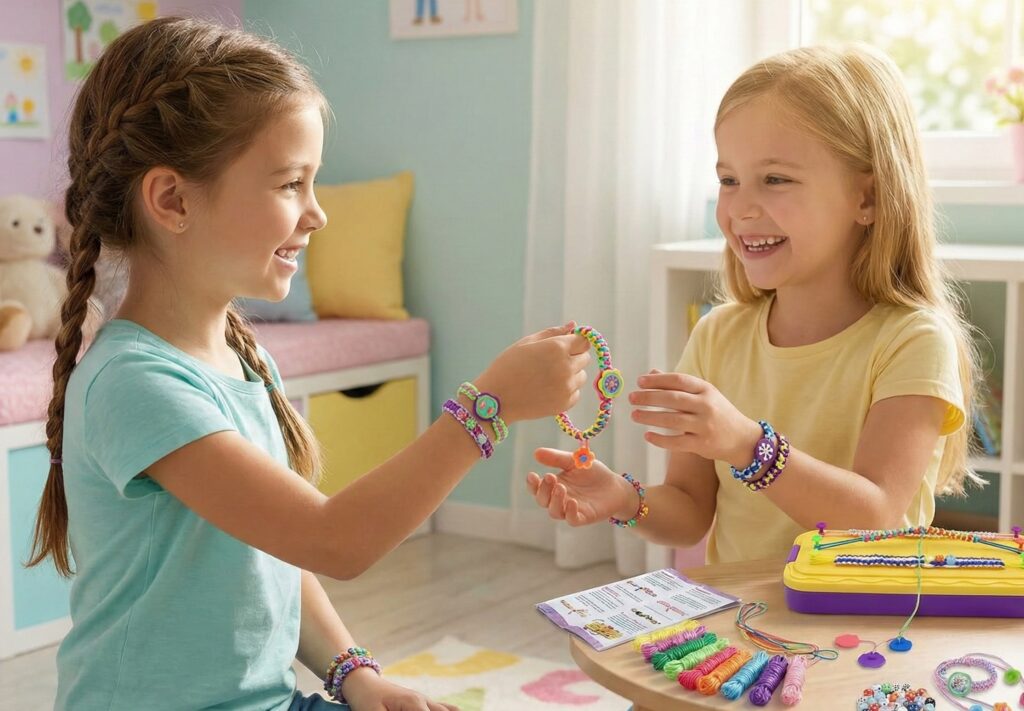
I do recommend sitting with your child during the first few uses to explain the basics. After that, many kids—including mine—can use it independently.
I didn’t encounter safety concerns, but as with any craft kit, light supervision goes a long way, especially early on.
Why This Kit Stuck With Me After Several Weeks
We’ve had many toys come and go. Most fade into the background. What made this one memorable wasn’t the product itself—it was the moments it created.
Quiet concentration.
Small frustrations followed by pride.
Bracelets made for friends and family.
Those moments are easy to overlook, but they’re often what parents are really searching for.
Final Thoughts: Sometimes “Good Enough” Is Exactly What a Family Needs
I’m not looking for the “best toy ever.” I’m looking for toys that fit my child and our family rhythm.
For us, this Friendship Bracelet Kit offered something simple but valuable: screen-free time, creativity, and patience. It won’t replace technology, and it shouldn’t. But it created space for something different—and that mattered.
If you’re a parent in the U.S. with an 8-year-old daughter and you’re curious about hands-on, creative activities that don’t rely on screens, this is a product worth learning more about. Not because of promises or hype, but because of how it fit into our everyday life.
YOU MIGHT ALSO LIKE: Big Discoveries Dumpster Dice in Toys and Games Category
This video was created using NotebookLM based on the review content from this blog