
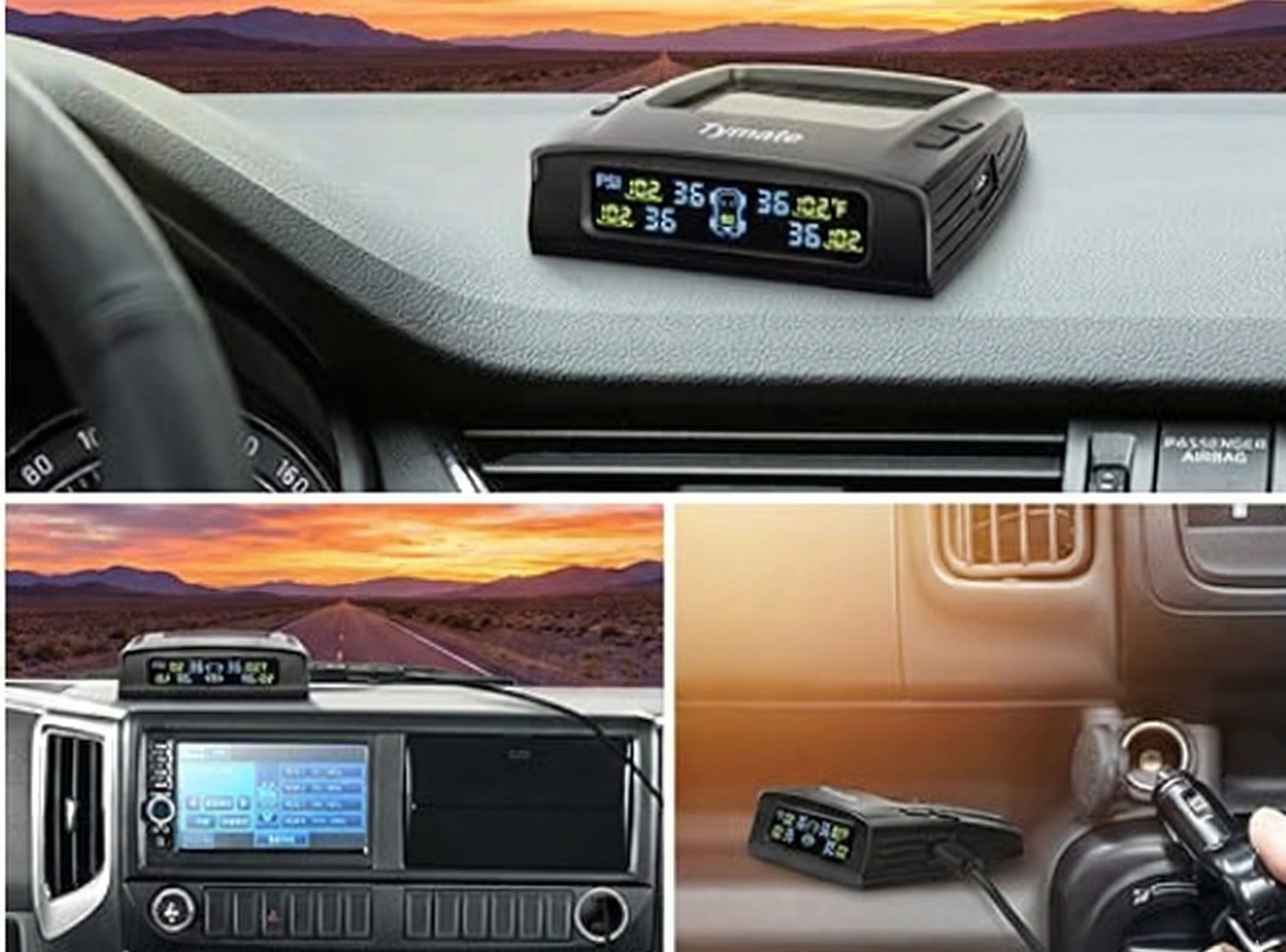
If you’ve ever towed a 30-foot trailer down a narrow highway at 65 mph, you know the “phantom vibration” feeling. Every time you hit a bump, you glance in the side mirror, wondering if that was just the road or the start of a catastrophic tire blowout.
Last summer, while hauling our camper through the Tennessee mountains with my wife and kids, that anxiety was at an all-time high. A trailer tire blowout isn’t just a flat; it’s a high-speed event that can tear through your wheel well and send you into a jackknife before you even feel the drag. That’s when my team at the lab and I decided to live-test the Tymate TM2 RV Tire Pressure Monitoring System.
I’m Nick Anderson, and I’ve spent years dissecting automotive gear. If you’re looking for honest consumer insights, you’re in the right place. I don’t care about flashy marketing; I care about whether this unit will beep loud enough to save my family’s lives before a tire shreds.
Advertising Disclosure
This video was generated by NotebookLM, summarizing the content of this blog post.
The Setup: Avoiding the “Tech Nightmare”
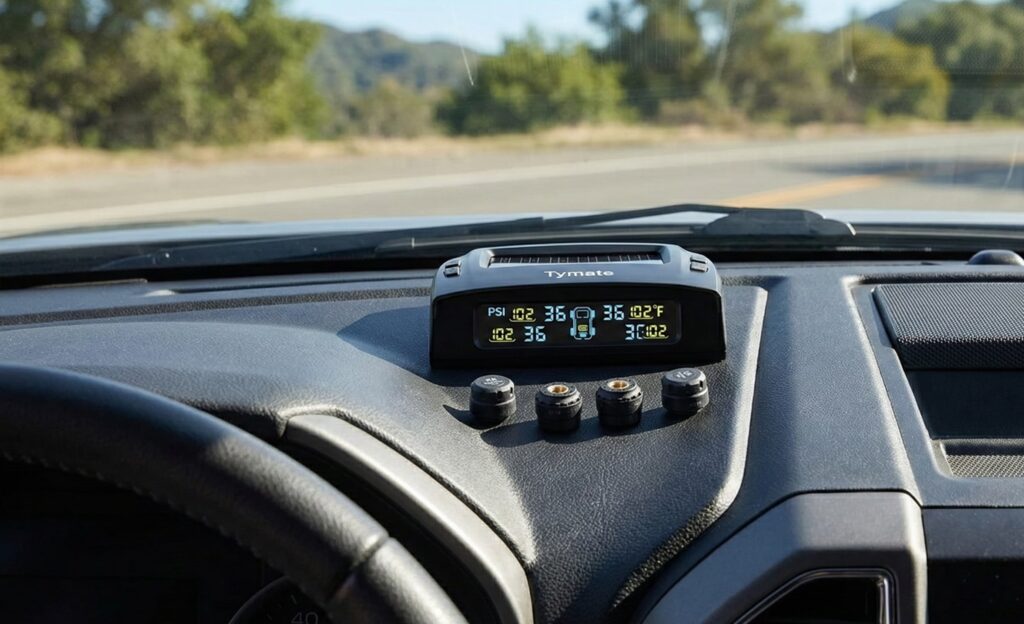
One thing I hate is gear that requires a PhD to install. The Tymate TM2 comes with 4 external sensors that simply screw onto your valve stems.
- The Installation: It took me and my 10-year-old son about 15 minutes to get all four sensors on and the monitor synced.
- The Sensors: They are labeled (LF, RF, LR, RR), so you don’t mix them up. My team noted the anti-theft nuts are a nice touch, though they make adding air a bit more tedious.
- Range: The TM2 is rated for RVs and trailers. We tested it on a 28-foot trailer hitched to a full-size truck (total length approx 50 feet), and the signal never dropped.
The Display: Solar Power That Actually Works
The monitor sits on your dash and charges via a built-in solar panel. I was skeptical—most solar gear in cars dies the moment you hit a cloudy patch.
- Real-World Test: We drove through a rainstorm in the Pacific Northwest for six hours. The battery held firm. If it does get low, there’s a micro-USB backup port, but in three weeks of testing, I never had to use it.
- Visibility: The new updated color LCD is a huge improvement over the older monochrome versions. Even in direct 2 PM sunlight, I could see the PSI and temperature readings without squinting.
6 Alarm Modes: Why They Matter
This isn’t just a “low pressure” light. The TM2 monitors:
- High Pressure (Prevents blowouts from over-inflation).
- Low Pressure (The most common culprit).
- High Temperature (Often the first sign of a failing bearing or dragging brake).
- Rapid Leak (If you hit a nail, you’ll know in seconds).
- Sensor Low Battery.
- Signal Loss.
When we deliberately bled air from a test tire, the alarm was loud—loud enough to wake up my 8-year-old daughter in the back seat. That’s exactly what you want when you’re preoccupied with traffic.
Comparison: How It Stacks Up
Pros & Cons
FAQ: Towing with Confidence
Do I need a signal booster for a long trailer?
Are the external sensors waterproof?
How long do the sensor batteries last?
Final Recommendation: Who Is This For?
If you are a weekend warrior towing a travel trailer, a boat, or a utility trailer, the Tymate TM2 is a no-brainer. It solves the biggest problem with towing: not knowing what’s happening back there until it’s too late.
It’s not for the industrial trucker, but for the average American family going on a camping trip, it’s the best $80 investment you can make for your safety.
For more honest consumer insights, check out our other trailer gear guides.
Ready to stop guessing? Check the current price of the Tymate TM2 RV TPMS on Amazon here.
YOU MIGHT ALSO LIKE: 5 Best Car Cleaning Gels in Automotive Products