
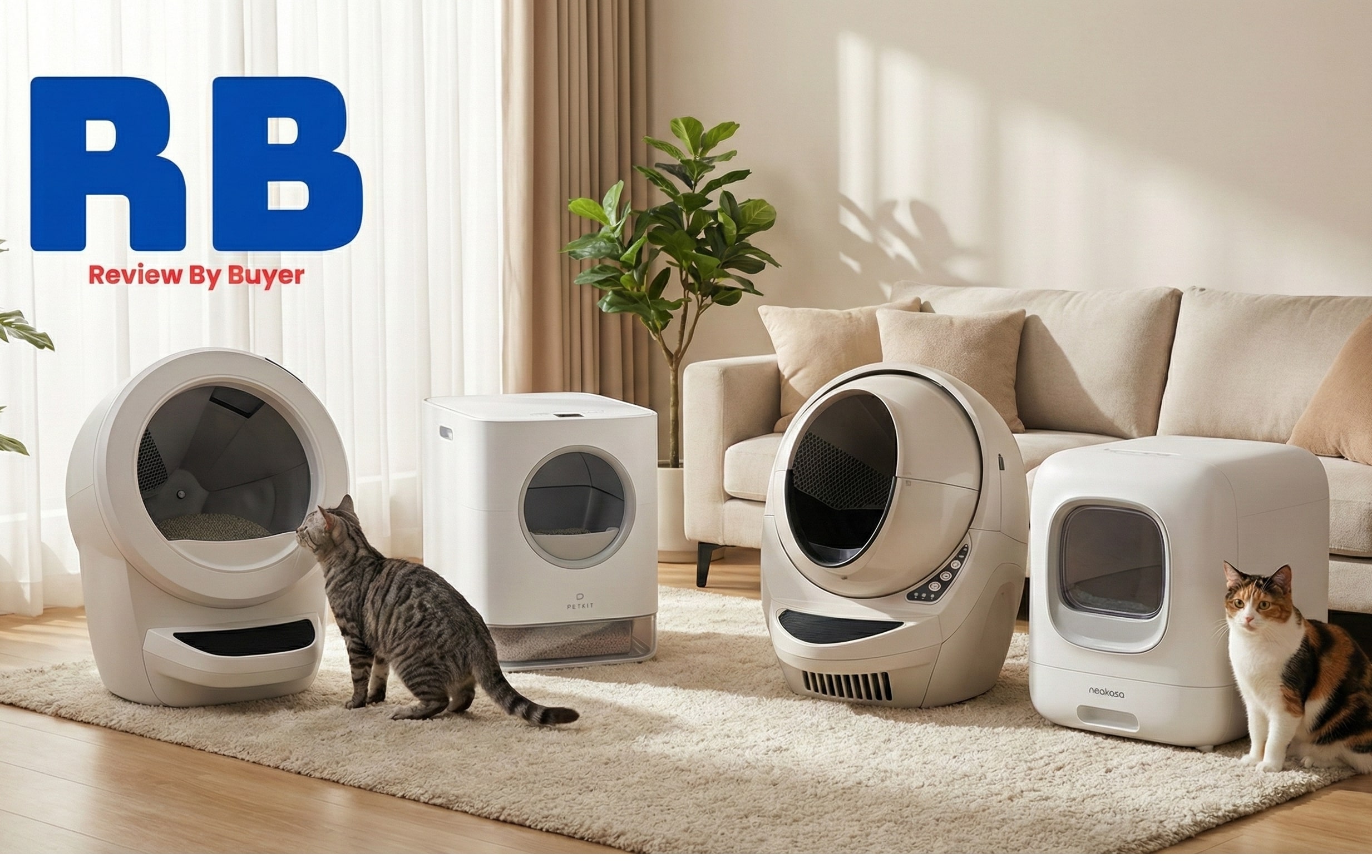
Let’s be honest: scooping cat litter is the worst part of pet ownership. It’s dusty, smelly, and a chore that never ends. At Review By Buyer, we’ve spent months testing the top automatic litter boxes on the market to answer the big question: Are they actually worth the $500+ investment?
We didn’t just look at the spec sheets. We lived with these machines. We dealt with the “pinch errors,” the unexpected leaks, and the terrified cats. Below is our unfiltered review of the best units for 2025, along with the specific “hacks” we discovered to keep them running smoothly.
Advertising Disclosure
Our Top Picks: The “Big Three” + The Open-Top Challenger
| Product | Why Buy? | Price |
|---|---|---|
| Top Pick Litter-Robot 4 | Whisper-quiet, best health tracking sensors. |
Check Price on Amazon |
| Best Value Petkit Pura Max | Low-entry design with auto odor spray. |
Check Price on Amazon |
| Multi-Cat Catlink Pro | Massive 13L waste bin for many cats. |
Check Price on Amazon |
| Safety Pick Neakasa M1 | Open-top design. Perfect for nervous cats. |
Check Price on Amazon |
1. The Premium Choice: Whisker Litter-Robot 4 (LR4)
If you have the budget, this is the gold standard. The Litter-Robot 4 feels like a genuine piece of smart home technology rather than a plastic appliance.

- The “OmniSense” Advantage: Unlike older models that relied solely on weight, the LR4 uses laser “curtain” sensors. It detects your cat the second they peek inside, making it incredibly safe.
- Living With It: It is shockingly quiet—our testers noted it’s quieter than a refrigerator humming. The waste drawer is generous, and the app is the most polished in the industry, giving you real-time weight tracking to monitor your cat’s health.
- The Flaw: The sensors are hypersensitive to dust. If you use dusty clay litter, you will get false “cat detected” alerts or interrupt cycles.
2. The Apartment Favorite: Petkit Pura Max (2025 Model)
This is the most popular unit for a reason: it balances price, size, and features perfectly.
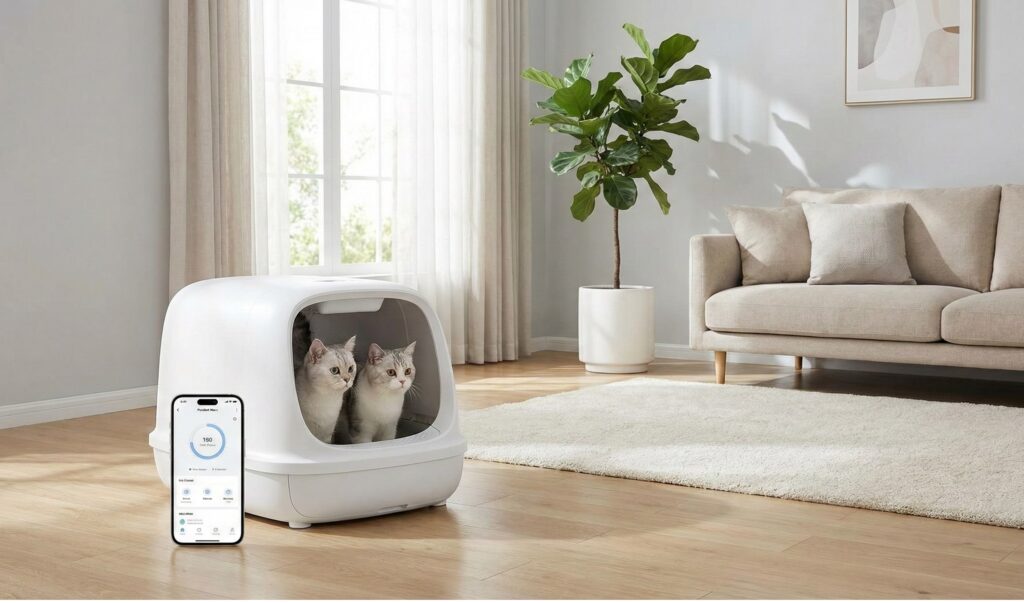
- Why We Like It: The square, cylinder design sits lower to the ground, making it much easier for older cats or Munchkins to enter compared to the Litter-Robot. The built-in “Pura Air” smart spray actually works, neutralizing odors automatically after every cycle.
- The Critical Update: Older models (2023/early 2024) had a major flaw where high-peeing cats caused urine to leak between the liner and the base. The 2025 version fixes this with a seamless liner and silicone spill guards. If you buy an older unit secondhand, be careful!
3. The Multi-Cat Workhorse: Catlink Scooper Pro
We call this “The Tank.” It isn’t the prettiest machine, but it is built for volume.
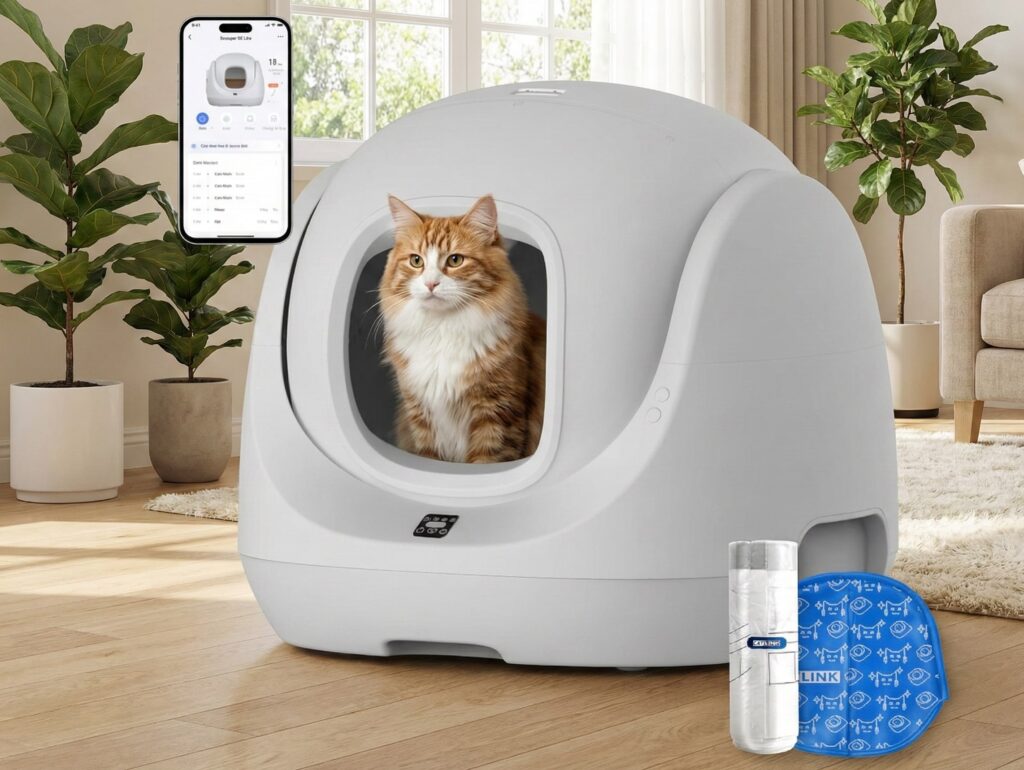
- Capacity King: The waste drawer is a massive 13 liters. In our testing with two cats, we could easily go 10-12 days without emptying it—longer than any other model.
- Sterilization: The “Luxury Pro” model includes UV sterilization, which helps kill bacteria in the waste drawer—a feature missing from the Litter-Robot.
- The Flaw: The entry is high and narrow. You almost certainly need to buy the separate ramp/stairs accessory, or your cat might refuse to use it.
4. The Claustrophobia Solution: Neakasa M1
A newer contender that completely changes the design philosophy.
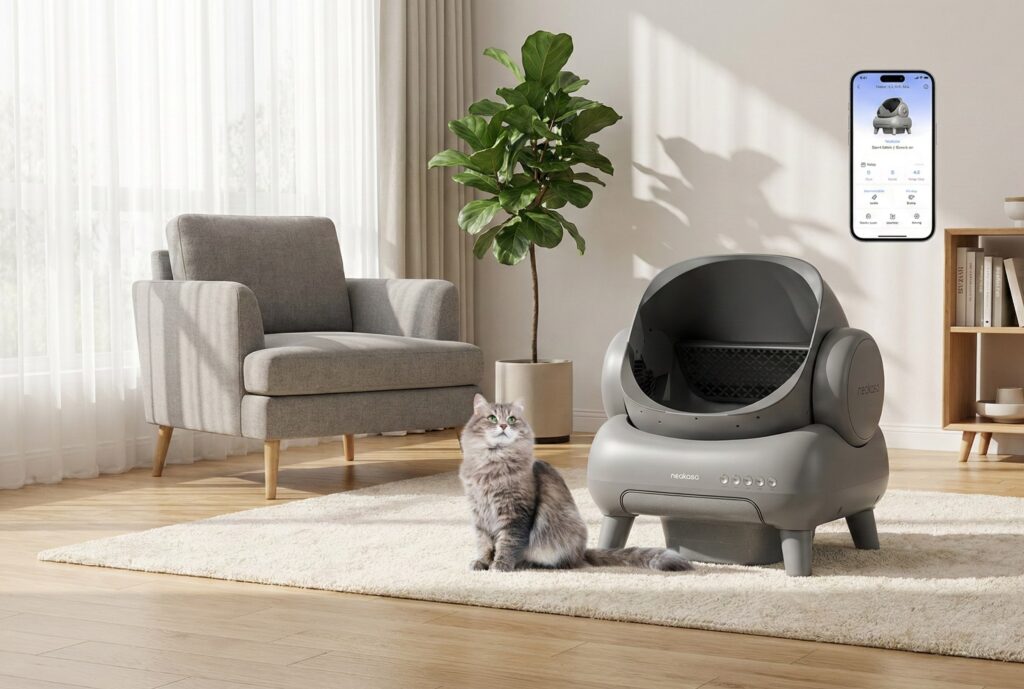
- Open-Top Design: Instead of a rotating cave, the Neakasa M1 is open. If your cat is skittish, hates covered boxes, or is a large breed like a Maine Coon that feels cramped in a globe, this is your best option.
- Safety: Because there is no “guillotine” closing mechanism, it is physically impossible for a cat to get stuck. It’s the safest design we’ve tested.
“How-To” Solutions: Fixing Real-World Problems
Buying the robot is the easy part. Getting it to work for your specific lifestyle requires some insider knowledge.
How to Stop the “Pinch Detect” Errors (Litter-Robot 4)
If your LR4 keeps pausing and flashing yellow/red despite no cat being there, it’s usually dirty sensors.
- The Q-Tip Hack: The laser sensors are located in the top bezel of the entrance. Use a dry Q-tip to wipe these lenses once a month.
- The Vacuum Trick: Use a vacuum hose attachment to suck dust out of the sensor holes. This resolves 90% of false stoppage issues.
How to Fix Urine Leaks (Petkit Pura Max)
If you have a “high pee-er” and didn’t get the 2025 model, you might find urine pooling under the machine.
- The Tape Seal: Remove the inner liner, clean the plastic drum thoroughly, and use waterproof electrical tape or a strip of silicone to seal the seam where the liner meets the plastic shell. This forces liquid down into the litter.
- The “N50” Upgrade: Purchase the upgraded “N50 Cylinder Mat” separately, which has higher sidewalls designed to prevent this exact issue.
How to Kill Odors (All Models)
Even sealed drawers smell eventually. Here is our protocol for a stink-free home:
- Baking Soda Layer: Don’t just rely on carbon filters. Sprinkle a thin layer of baking soda in the bottom of the waste drawer bag every time you change it. It neutralizes ammonia instantly.
- Change the Timer: In your app, increase the “Wait Time” to 15 or 20 minutes. If the cycle runs too soon (e.g., 3 minutes), the clump hasn’t fully hardened and will smear on the globe, creating a permanent stink.
How to Train a Scared Cat (The “Power Off” Method)
The biggest mistake buyers make is plugging the unit in immediately.
- Week 1: Set up the robot but DO NOT plug it in. Fill it with litter and add a scoop of their old dirty litter (scent transfer).
- Bribery: Place treats on the step of the robot, but not inside the litter. Make the robot a “happy place.”
- The Switch: Stop cleaning their old box. Cats prefer clean litter. Once they use the robot consistently (while it’s off), you can plug it in.
- Auto-Mode: Only turn on “Automatic Cycle” once they are completely comfortable. Start with the longest delay setting.
The Bottom Line
Making the switch to an automatic litter box is an investment in your freedom, but it isn’t a one-size-fits-all solution. If you want the absolute best technology and safety features, the Litter-Robot 4 is the undisputed king. For apartment dwellers who need a quiet, space-saving workhorse, the Petkit Pura Max is the smart value pick—just remember to use our liner hack! And if your cat hates enclosed spaces, the Neakasa M1 is the safest open-top alternative. Whichever you choose, give your cat time to adjust; once they do, you’ll never go back to scooping again
YOU MIGHT ALSO LIKE: 10 Best Pet Christmas Sweaters