
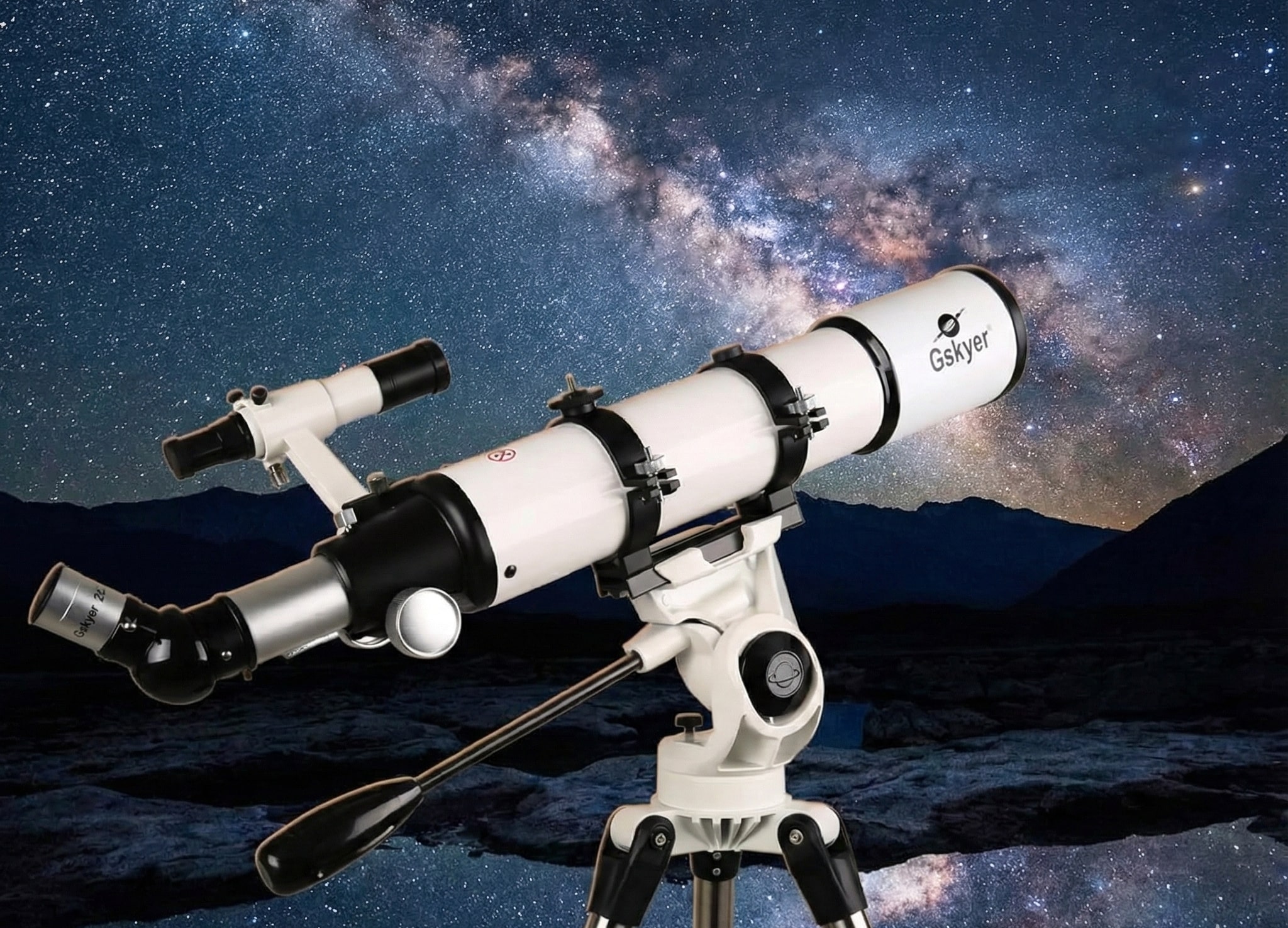
If you have been browsing bestseller lists for “beginner telescopes” online, you have undoubtedly seen the Gskyer 70mm Aperture 400mm AZ Mount. With thousands of ratings, it is often the first telescope people consider gifting to children or buying for a casual interest in astronomy.
To separate the hype from the hardware, our team took this unit out of the box and under the night sky. The short answer? It is a capable “science toy” that can spark a lifelong passion, provided you understand exactly what it can—and cannot—do.
Advertising Disclosure
1. Unboxing & Setup: The “Grab-and-Go” Appeal
The most immediate selling point of this telescope is the packaging.
- Portability: Everything fits neatly into the included custom backpack. For US families enjoying camping trips or backyard firepit nights, this design is brilliant. It takes up minimal trunk space.
- Assembly: We clocked the setup time at under 7 minutes. No tools are required. The optical tube mounts to the tripod via a simple screw mechanism, making it accessible even for a 10-year-old to assemble with supervision.
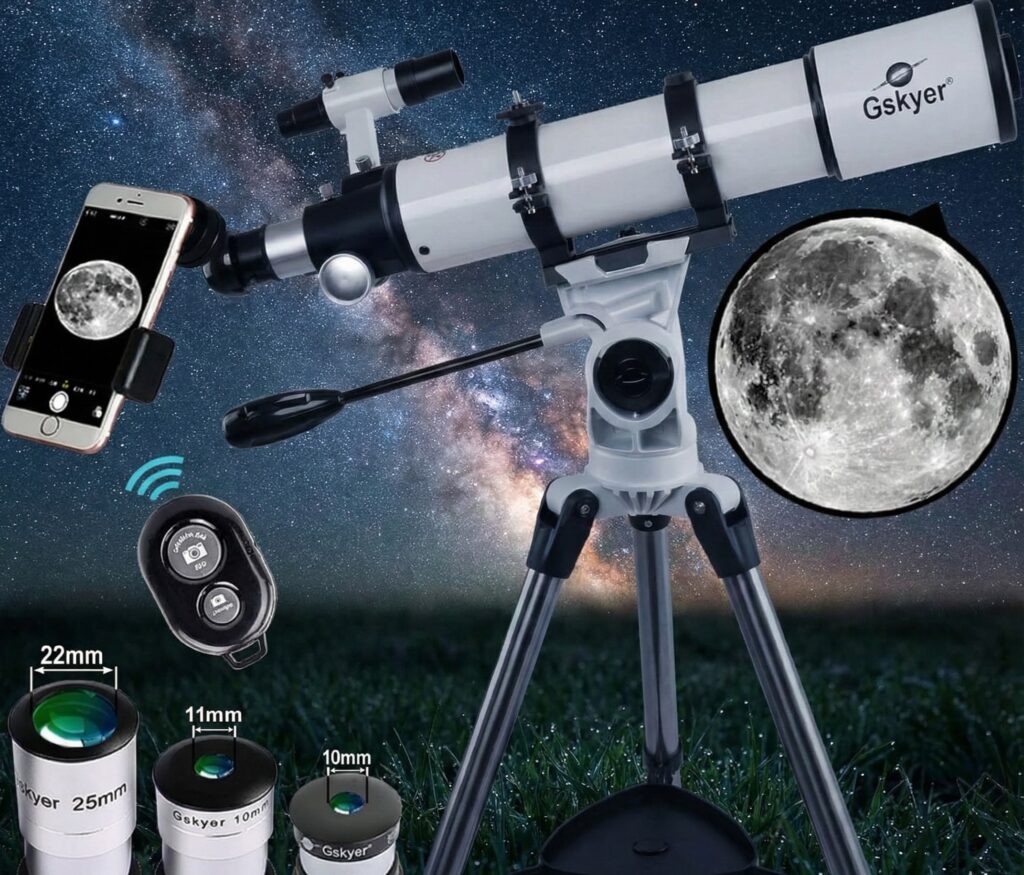
- Kit Content: Gskyer includes a surprising amount of gear: two eyepieces (25mm and 10mm), a 3x Barlow lens, a finder scope, a 45-degree diagonal, and a smartphone adapter with a Bluetooth remote.
Field Note: The instructions are visual and easy to follow, but they lack depth on how to actually observe. Beginners often struggle with the first focus because they don’t know to start with the low-power eyepiece.
2. Optical Performance: The Truth About the View
The Moon: Its Best Subject
The Gskyer 70mm shines when pointed at the Moon.
- The Experience: Using the 25mm eyepiece, the Moon fits perfectly in the field of view. Our team was able to clearly resolve craters, maria (dark plains), and the rugged terminator line.
- Aberration: We noticed a thin purple or blue line around the bright edge of the Moon (chromatic aberration). This is standard physics for a short-tube refractor at this price point and does not ruin the experience for beginners.
Planetary Viewing: Manage Your Expectations
- Saturn & Jupiter: Yes, you can see them. We could distinguish Saturn’s rings (appearing as a small oval separate from the planet) and Jupiter’s four Galilean moons. However, do not expect to see the Cassini Division in Saturn’s rings or detailed cloud bands on Jupiter. The image is small and bright but lacks high-definition contrast.
- The “Barlow” Warning: The kit includes a 3x Barlow lens which claims to triple magnification. In our tests, this accessory pushed the optics beyond their useful limit. The image became dark, blurry, and impossible to focus. Pro Tip: Keep the Barlow in the box and stick to the standard eyepieces for crisp views.
3. The Mechanics: The “Wobble” Factor
This is the primary compromise made to keep the system budget-friendly.
- Tripod Stability: The aluminum tripod is extremely lightweight. While great for carrying, it is susceptible to vibration. In our field test, tapping the focus knob caused the image to “dance” for about 3-4 seconds before settling. Patience is required.
- The “Sag”: We experienced a mechanical quirk known as “sagging.” When you lock the telescope onto a target (like a star), the weight of the tube causes it to dip slightly after you let go. We had to learn to aim slightly above the target to compensate.
4. Terrestrial Use & Photography
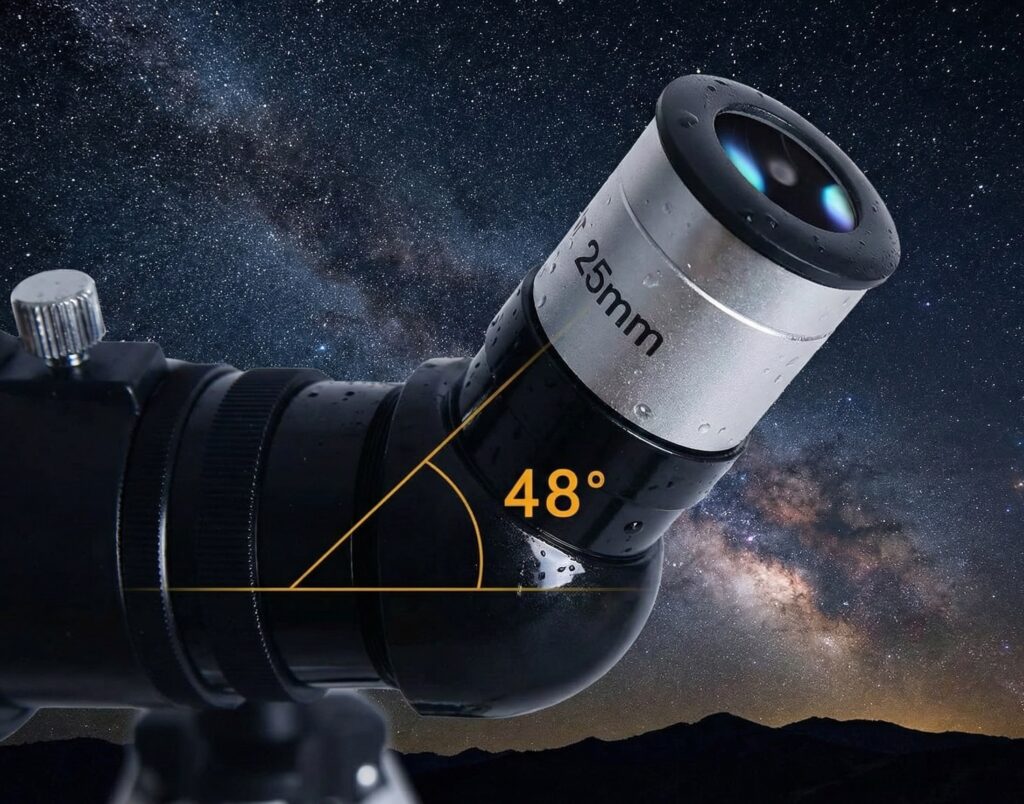
- Daytime Spotting: The included diagonal is a 45-degree “erect image” prism. This means images are right-side up (unlike many astronomical scopes which flip images). This makes the Gskyer an excellent spotting scope for birdwatching or viewing nature during the day.
- Smartphone Adapter: The phone mount is a bit fiddly to align, but the inclusion of a Bluetooth shutter remote is a nice touch. It allows you to take photos without touching the screen, eliminating camera shake. We captured shareable shots of the lunar surface easily.
5. Final Verdict
- Parents: Looking for a STEM gift to gauge a child’s interest in space before investing in expensive gear.
- Travelers: Campers and hikers who want a dual-purpose scope for nature by day and Moon by night.
- Social Sharers: People who want that one cool photo of the Moon for their social feed.
- Serious Aspiring Astronomers: If you want to hunt faint galaxies or see detail on Mars, you will outgrow this quickly.
- Impatient Users: The tripod wobble requires a steady hand and patience.
Bottom Line: The Gskyer 70mm is not a professional instrument, but it is a fantastic “first look” into the cosmos. It bridges the gap between a toy and a scientific tool, offering decent value for the entry-level price bracket.
Frequently Asked Questions (FAQ)
Can the Gskyer 70mm see Saturn’s rings?
Why do I only see a white blur or black screen?
Is this telescope good for astrophotography?
Can I use this for birdwatching?
How can I stop the telescope from shaking?
- Do not extend the tripod legs to their maximum height (keep the center of gravity low).
- Hang a small weight (like a water bottle) from the center of the tripod for added stability.
- Use the Bluetooth remote when taking photos to avoid touching the unit.
YOU MIGHT ALSO LIKE: Top 360 Cameras of 2025, Apple AirTag Review [2025], Unique Christmas Gift Ideas for Teenagers