If you’re planning a cross-country road trip or looking to capture your next MTB run in full spherical glory, 2025 has been a wild year for gear. The days of grainy 5.7K footage are officially behind us.
For the past two weeks, our team has been field-testing the three heavyweights fighting for your wallet: the Insta360 X5, the DJI Osmo 360, and the long-awaited GoPro Max 2. We’ve taken them hiking in the Rockies, riding through city streets at night, and yes, we even crashed a few (for science).
Here is our honest, hands-on review to help you decide which rig belongs in your gear bag.
Advertising Disclosure
1. Insta360 X5: The “Workflow King” & Most Versatile Choice
When we unboxed the X5, it felt familiar but refined. Insta360 has dominated this space for years, and with the X5, they stopped chasing gimmicks and fixed the actual hardware problems we’ve all complained about.
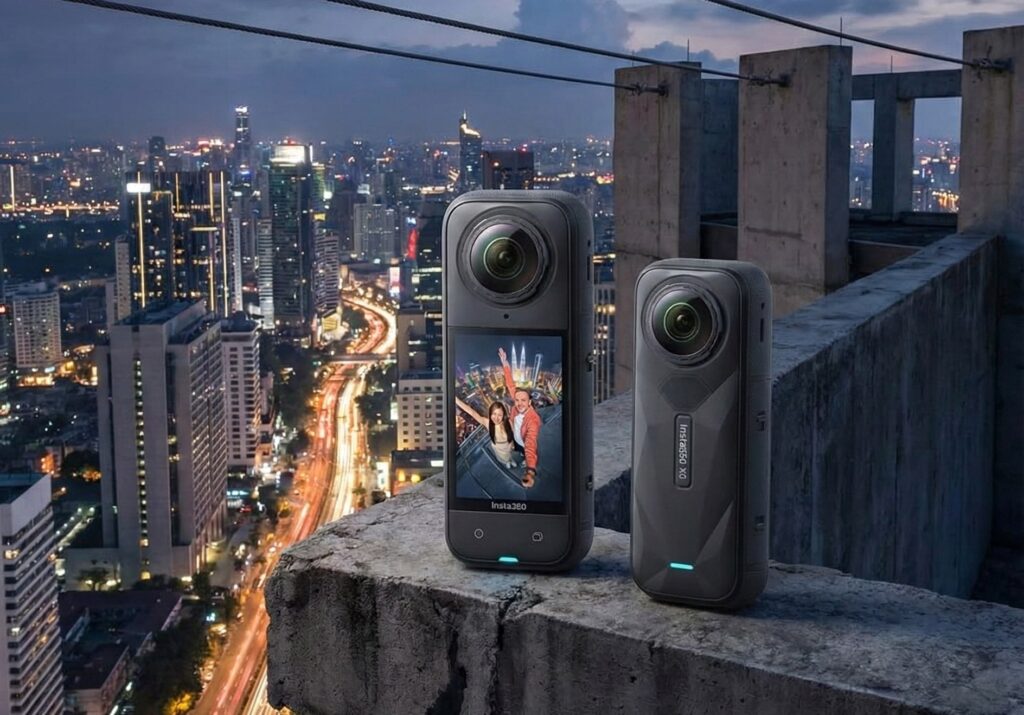
- Replaceable Lens Guards (Game Changer): We cannot stress this enough—this is a life-saver. In the past, scratching a bulbous 360 lens meant your camera was toast or required a pricey repair. With the X5, we were able to unscrew the scratched lens guard and pop on a new one in under 60 seconds right on the trail. For action sports enthusiasts, this peace of mind is worth the price of admission alone.
- AI “PureVideo” Low Light Performance: We were skeptical about the 5nm AI chip claims, but the results shut us up. Shooting at dusk, the X5 managed to clean up the noise (grain) significantly better than the previous X4. The footage is usable straight out of the camera without needing heavy noise reduction in post-production.
- The Mobile App Ecosystem: In the US market, time is money. Insta360’s app remains undefeated. Features like Shot Lab allow us to create complex edits—like sky swaps or cloning trails—in seconds using AI templates. For creators who want to edit on their iPhone while grabbing a coffee and upload directly to TikTok or Instagram Reels, this workflow is unbeatable.
- Waterproofing Anxiety: While it’s rated IPX8 (33ft), we noticed some moisture around the battery door after a dip in a freshwater stream. If you plan on diving or swimming, do not trust the bare camera. Get the Invisible Dive Case.
2. DJI Osmo 360: The Hardware Beast & Night Owl
DJI arrived late to the 360 party, but they kicked the door down. While Insta360 relies on software magic, the Osmo 360 relies on superior physics.

- 1-Inch Square Sensors: This is the nerdy spec that matters. Most 360 cameras crop a rectangular sensor, wasting pixels. DJI uses a square sensor that maximizes the image circle. In our tests, this resulted in incredible Dynamic Range. Shooting directly into the sun? The Osmo 360 retained blue skies and green shadows better than anything else we tested.
- “SuperNight” Mode: We took this camera for a night walk in downtown LA, and it blew the competition away. The footage was crisp, vibrant, and surprisingly clean. If you are a nightlife vlogger or do a lot of evening content, this is your winner.
- Seamless Audio with DJI Mic 2: This was a favorite feature for our motovlogging team member. You can connect a DJI Mic 2 transmitter directly to the camera via Bluetooth—no receiver dongle hanging off the side, no wires. It makes for the cleanest, most aerodynamic helmet setup we’ve ever used.
- The App Needs Work: The DJI Mimo app is functional, but it feels rigid compared to Insta360. Reframing takes a few more clicks, and it lacks the fun, creative AI templates.
- Bulkier Build: It feels industrial and dense. It’s heavier on the end of a long selfie stick.
3. GoPro Max 2: The Return of the Veteran
It’s been five years since the original Max, and the Max 2 is finally here. It hits the nostalgia buttons for longtime GoPro users, but does it hold up?
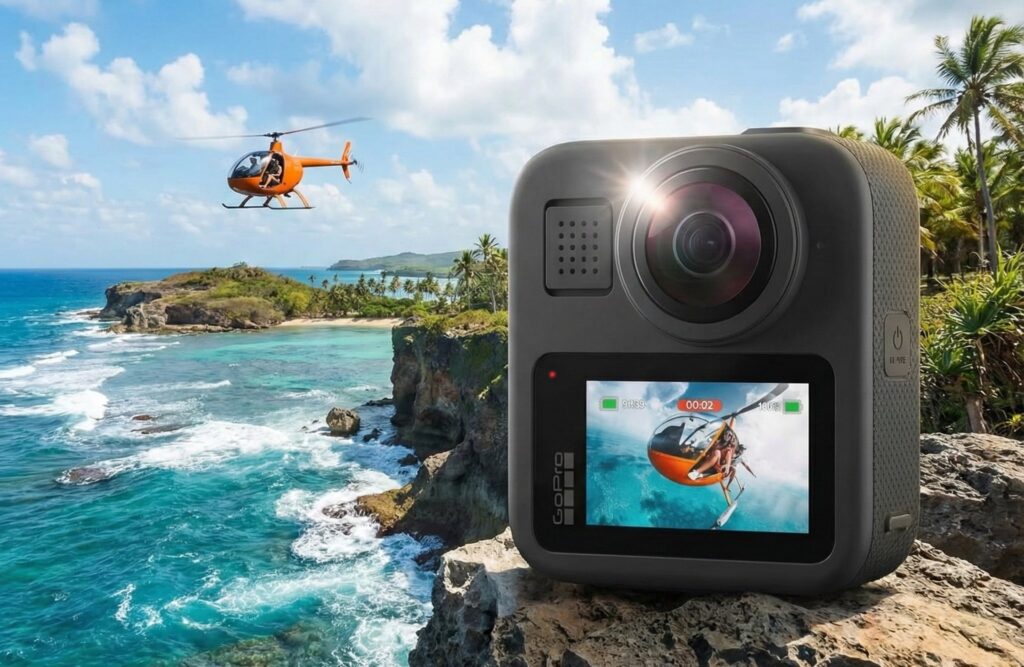
- The “GoPro Look”: There is something distinct about GoPro’s color science. In bright daylight, the Max 2 produces punchy, high-contrast, vibrant 8K video that looks “ready to publish” without color grading. The blue skies look incredible.
- Rugged Mounting System: We love the new magnetic latch mounting combined with the traditional folding fingers. It makes swapping the camera from a chest mount to a selfie stick incredibly fast.
- Subscription Benefits: If you are in the US, the GoPro Subscription is a solid deal. Unlimited cloud backup and, most importantly, the “No-Questions-Asked” camera replacement policy. If you smash this thing on a rock, they replace it for a small deductible. For high-risk sports, this is huge.
- Thermal Issues: This was the biggest letdown. In our static studio test (indoors, no airflow), the Max 2 overheated and shut down after about 18-20 minutes of 8K recording. It needs wind. It’s great for skiing or biking, but terrible for sitting on a tripod recording a podcast.
- Smaller Sensors: It struggles the moment the sun goes down.
4. Quick Specs Comparison
| Feature | Insta360 X5 ↗ | DJI Osmo 360 ↗ | GoPro Max 2 ↗ |
|---|---|---|---|
| Max Resolution | 8K 30fps | 8K 30fps (Square Sensor) |
8K 30fps |
| Low Light | Great (AI Denoise) | Excellent (Best in Class) | Average |
| Mobile App | Superior (Best Workflow) | Good | Basic |
| Lens Protection | Removable Lenses | Fixed (Requires Guards) |
Removable Lenses |
| Battery Life | ~135 mins | ~130 mins | ~60 mins Overheats |
| Price | Check Price on Amazon | Check Price on Amazon | Check Price on Amazon |
5. Our Verdict: Which One Should You Buy?
After putting them through the wringer, here is our final take for the US market:
🏆 Best All-Rounder (Editor’s Choice): Insta360 X5
Why? Because friction kills creativity. The X5 has the best app, the easiest editing workflow, and the replaceable lenses make it durable enough for daily abuse. It balances hardware and software perfectly. If you want to shoot, edit on your phone, and post within 10 minutes, get this.
🥈 Best for Image Quality Pros: DJI Osmo 360
Why? If you care about every single pixel and plan to edit on a desktop computer, the DJI’s 1-inch sensor is superior. It’s also the only real choice for low-light shooters.
🥉 Best for GoPro Loyalists: GoPro Max 2
Why? Buy this only if you already own 50 GoPro mounts, subscribe to their cloud service, and plan to use it exclusively for high-speed action sports (where the wind will keep it cool).
YOU MIGHT ALSO LIKE: Apple AirTag Review [2025], The 6 Best Wireless CarPlay Adapters of 2025
FAQs
Which 360 camera has the best low-light performance in 2025?
Does the GoPro Max 2 overheat when recording 8K video?
Is the Insta360 X5 truly waterproof without a case?
Can you replace the lenses on the Insta360 X5?
Which 360 camera has the best mobile editing app?
Have you tried any of these cameras? Let us know your thoughts in the comments below!