Welcome to what is, without question, one of the most researched, debated, and anxiety-inducing purchases of new parenthood: the baby stroller.
If you’re reading this, you’ve likely already discovered that choosing a stroller isn’t just “buying a thing.” It’s a significant financial investment, with prices ranging from $150 for a simple travel system to well over $1,200 for a premium model. It’s an ergonomic decision that will affect your back and wrists every single day. And it’s a lifestyle choice that will either make your daily life—from grocery runs to park walks—a seamless joy or a daily frustration.
The American stroller market is a multi-billion dollar industry flooded with options, and the paralysis is real. But after an exhaustive analysis of the market, the products, and the real-world feedback from parents who use them every day, I can tell you one simple truth:
There is no such thing as the “best stroller.” There is only the “best stroller for your lifestyle.”
This guide will decode the market for you. We’ll explore the hidden psychology that drives your purchase, break down the hottest-selling market segments, and provide an in-depth, no-nonsense review of the top 10 strollers that American parents are buying right now.
Advertising Disclosure
Decoding the 2025 Parent Mindset: The 4 Factors That Actually Drive Your Decision
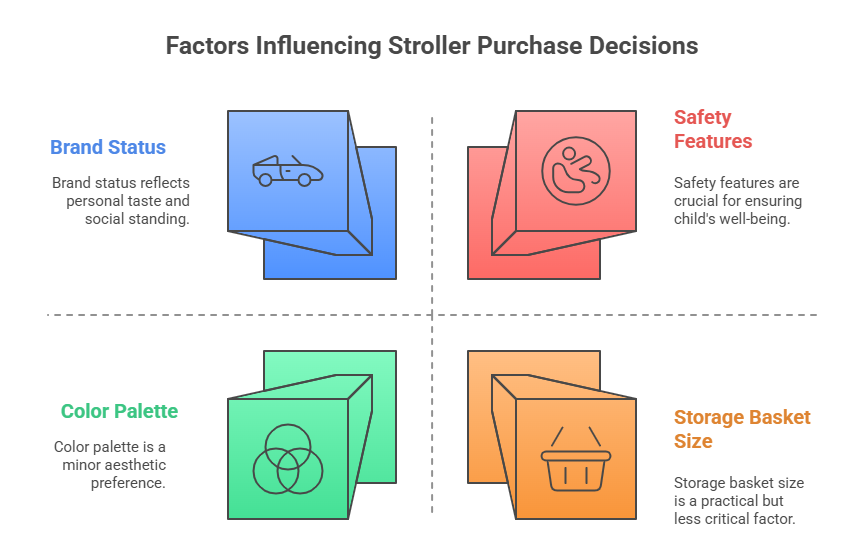
When you’re comparing two strollers, you might think you’re deciding between wheel size and canopy length. In reality, you’re navigating a complex mix of four psychological and practical drivers.
1. Safety is Non-Negotiable
This is the first and most important filter. Your primary concern is your child’s security, and this manifests in a few key areas. You are looking for a non-negotiable five-point harness, effective and easy-to-use brakes, and a frame that feels solid and sturdy, not wobbly.
But the search for safety goes deeper. You are looking for trust signals. The JPMA (Juvenile Products Manufacturers Association) Certification seal is a powerful one. While voluntary, this certification means an independent lab has tested the stroller against rigorous ASTM standards. For a tired parent facing a wall of options, that seal is a mental shortcut to “peace of mind.”
A growing concern for Millennial and Gen Z parents is chemical safety. This has created a booming premium market for strollers with non-toxic materials. Certifications like GREENGUARD Gold, which ensures low VOC (volatile organic compound) emissions, are no longer a niche feature but a major selling point for high-end brands like Nuna and UPPAbaby.
2. The Daily Convenience Factor
If safety is the prerequisite, convenience is what determines your long-term happiness. A stroller that is safe but a nightmare to use will be a source of daily regret.
- The “One-Hand Fold”: This is the holy grail of convenience features. The marketing for this is aimed directly at a real-life scenario: you, holding a crying baby in one arm, needing to collapse the stroller and get it into the trunk with your one free hand. A stroller that truly achieves this (like the Baby Jogger City Mini or Joolz Aer+) often wins the sale on this feature alone.
- Weight and Folded Size: This is a pure logistics problem. “Can I lift this into the back of my SUV?” “Will this fit in my small apartment closet or entryway?” This is especially critical for city dwellers or any parent who will have to carry the stroller up a flight of stairs.
- The Storage Basket: First-time parents consistently underestimate the importance of the basket. Veteran parents know it’s a deal-breaker. A tiny or inaccessible basket is a top source of buyer’s remorse. You need a basket that can hold a large diaper bag, your purse, a few stray jackets, and ideally, a small grocery run.
3. Lifestyle is Everything (The Urban vs. Suburban Divide)
This is the single biggest factor that should guide your purchase. Buying a stroller that doesn’t match your geography is the number one mistake.
- Urban Dwellers (e.g., NYC, Boston, Chicago): Parents navigating city life have a unique set of needs. They face narrow shop doorways, crowded sidewalks, subway stairs, and tiny walk-up apartments. Their priorities are:
- Slim Profile: Can it fit through a tight aisle?
- Lightweight: Can I carry it up three flights of stairs?
- Maneuverability: Can I steer it one-handed around pedestrians?
- Suburban Families (e.g., Texas, California, the Midwest): This parent lives an SUV-centric life. They have more space and drive almost everywhere. Their stroller is their “neighborhood command center.” Their priorities are:
- All-Terrain Wheels & Suspension: Can it handle cracked sidewalks, grassy parks, and gravel paths smoothly?
- Massive Storage: The basket is a second trunk for all-day outings.
- Durability: It needs to be a workhorse.
4. “Future-Proofing” and the Status Symbol
Two final factors tip the scales, especially at the premium end.
- “Future-Proofing”: First-time parents often have a “buy once, cry once” mentality. They want a stroller that will grow with their family. This single desire created the entire convertible stroller market. Why buy a $700 single stroller now, only to buy a $900 double stroller in two years? Parents are willing to pay $1,000+ upfront for a convertible model like the UPPAbaby Vista or Mockingbird, which can transform from a single to a double, saving them a future purchase.
- The Status Symbol: Let’s be honest—a stroller is a daily public accessory. For many, it’s a fashion statement and a signal of their taste and status, no different from a designer handbag or a luxury car. Brands like UPPAbaby, Nuna, and Bugaboo have cultivated this image with sleek designs, vegan leather-wrapped handlebars, and curated color palettes.
Market Overview & The Hottest-Selling Segments
The global baby stroller market is a massive, multi-billion dollar industry, and North America is its most dominant region, accounting for over 37% of all sales. While competitive, the thousands of options all filter into four main categories that American parents are buying.
1. Travel Systems
This is the traditional, all-in-one package that includes a full-size stroller and a compatible infant car seat that clicks into both the stroller and a car base. Its primary selling point is the unmatched convenience of being able to move a sleeping newborn from the car to the stroller without unbuckling them. This segment is dominated by mass-market stalwarts like Graco, Chicco, and Evenflo.
2. Lightweight / Travel Strollers
This is the largest and fastest-growing segment of the market, accounting for 39% of sales. Its growth is driven by a phenomenon I call the “Two-Stroller Reality.” Many families start with a large, full-featured stroller or jogging stroller, only to quickly realize this “beast” is too heavy and bulky for quick errands. This prompts the purchase of a second stroller: a lightweight, compact model that lives in the car trunk for Target runs, doctor’s appointments, and, of course, travel. Ironically, this “second” stroller often becomes the primary one used most often.
3. Convertible Strollers (Single-to-Double)
This is the premium “future-proof” category. These strollers are engineered to grow with a family, starting as a single and later adding a second seat (and sometimes a ride-along board for a third child). The UPPAbaby Vista is the undisputed icon of this category , with the direct-to-consumer Mockingbird challenging its dominance at a much lower price point.
4. Jogging / All-Terrain Strollers
This is a specialized segment for active parents. These models are instantly recognizable by their three-wheel design, large, air-filled (bicycle-style) tires, and advanced suspension systems built to absorb shock at high speeds and on rough terrain. Brands like Thule and BOB Gear are leaders here.
The 2025 Top 10: An In-Depth Review of America’s Best-Rated Strollers
This list is prioritized based on overall user and expert satisfaction, balancing build quality, features, and real-world performance.
1. UPPAbaby Vista V3
Segment: Best-in-Class Premium Convertible
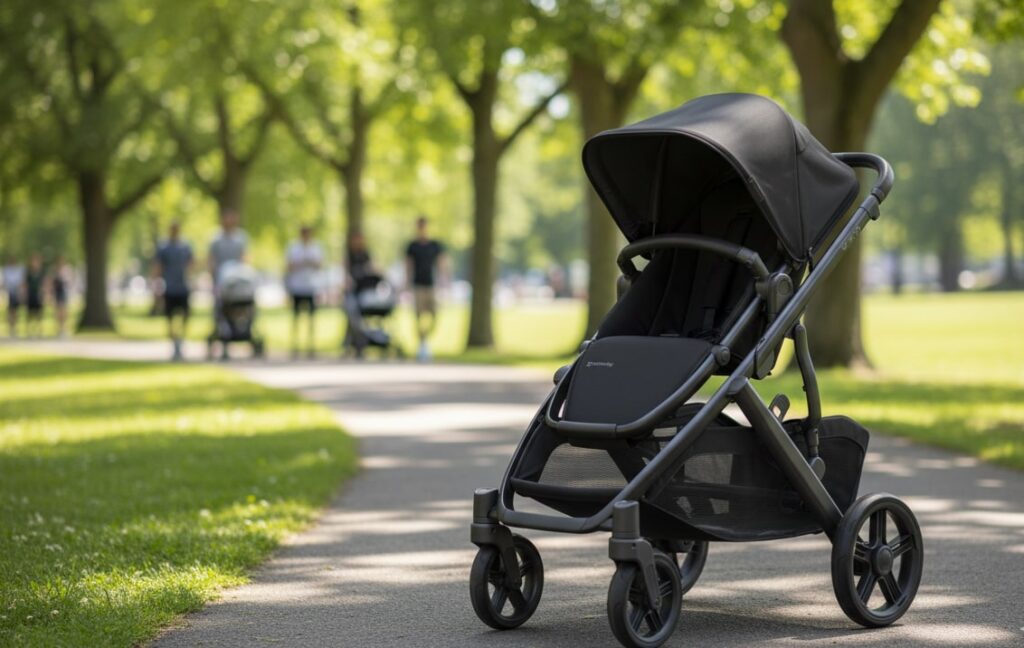
- Detailed Pros: The Vista V3 is the “luxury SUV” of the stroller world, and it’s the gold standard for many suburban families. Its market-leading storage basket is, without exaggeration, the number one reason families choose it. With a 30-pound weight capacity and an opening large enough to fit a diaper bag, a grocery run, and winter coats, it functions as a second car trunk. The build quality is exceptional; it feels incredibly solid, durable, and glides over bumps with a “buttery smooth” push, thanks to its all-wheel suspension and premium, never-flat wheels. It comes standard with a bassinet that is approved for overnight sleep, a huge value-add for newborns. The 2025 V3 model introduces an enhanced suspension system, an all-weather seat with a mesh insert for summer, and is GREENGUARD Gold certified for low chemical emissions. Finally, its resale value is the highest on the market, allowing parents to recoup a significant portion of the cost years later.
- Realistic Cons: It is one of the most expensive strollers available. It is also extremely heavy (27.9 lbs as a single) and bulky, making it a poor choice for small cars or walk-up apartments. The biggest complaint by far, however, is that its function as a double stroller is awkward. The second “Rumble Seat” sits low to the ground, crammed into the basket area, offering a limited view and cramped legroom for the second child.
2. Joolz Aer2
Segment: Best-in-Class Ultra-Premium Travel
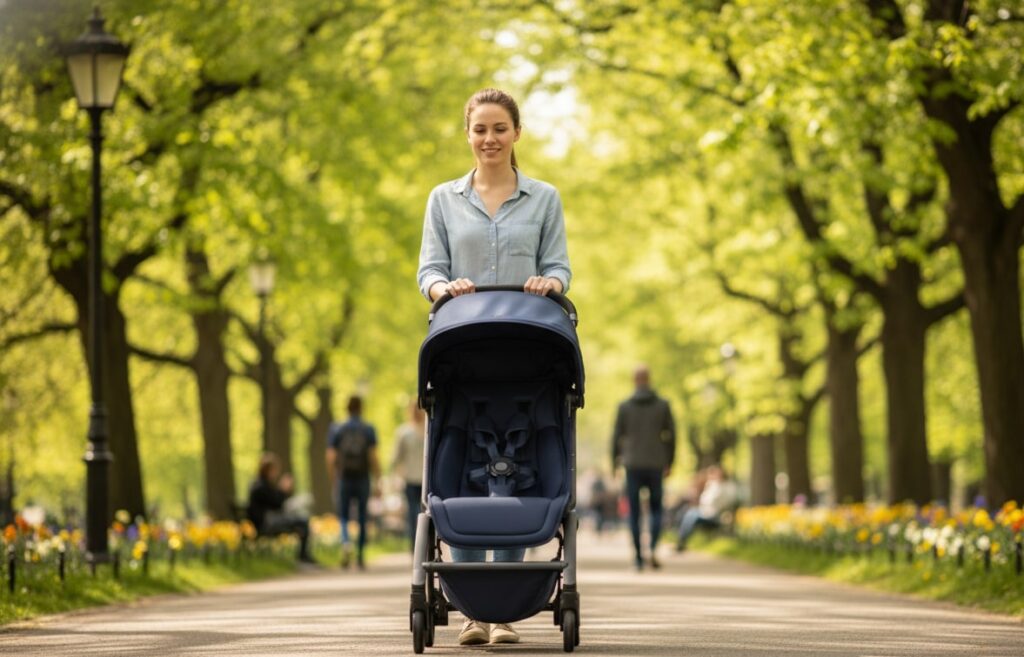
- Detailed Pros: The Joolz Aer2 competes at the very top of the luxury travel market and often wins on pure engineering. Its one-hand fold/unfold is arguably the best on the market—it’s incredibly smooth, fast, and can genuinely be done in one second with one hand while holding a child. Unlike many travel strollers that feel “flimsy,” the Aer2 has superior build quality and feels remarkably solid and sturdy. The seat is exceptionally comfortable, well-padded, wider than competitors, and features a deep recline (an improvement on its predecessor) that’s excellent for naps. It’s IATA-compliant, meaning it fits in the overhead bin of most airplanes.
- Realistic Cons: It carries a very high price tag for a “secondary” stroller. The under-seat storage basket is small, even for a travel stroller. The adjustable leg rest, a key comfort feature for toddlers, is not integrated and must be purchased as a separate accessory.
3. Bugaboo Butterfly
Segment: Best Premium Travel Stroller (Design Focus)
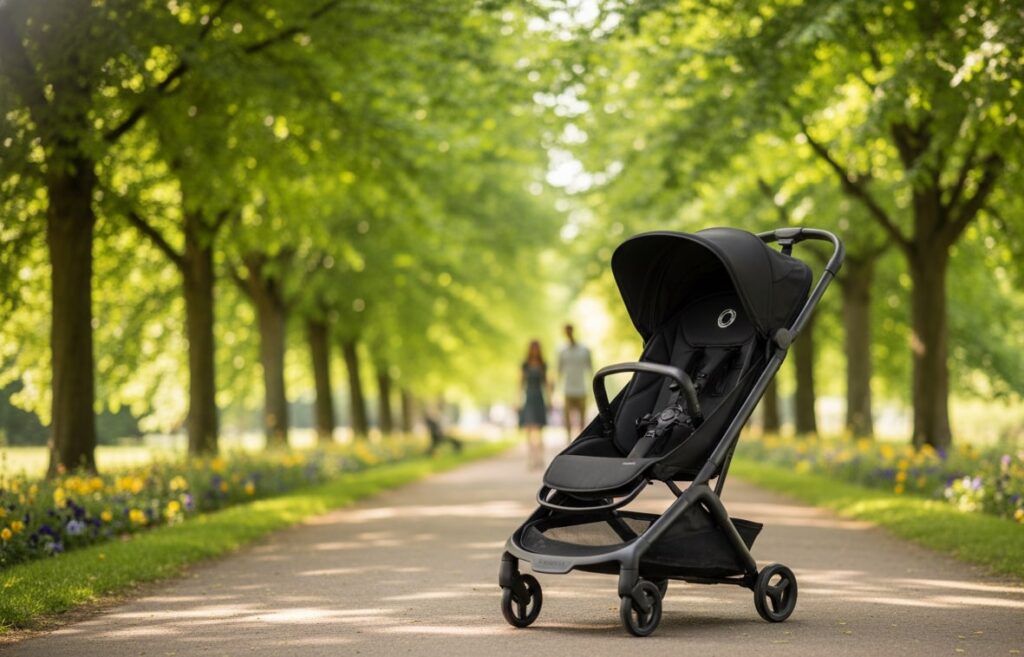
- Detailed Pros: The Butterfly is the Joolz Aer+’s direct rival and wins on design and storage. It also features an impressive “one-second” fold that is fast, easy, and airline-compliant. Its biggest advantage is its storage basket, which is massive for a travel stroller. It holds 17.6 lbs and has a spring-loaded, open-back design that makes it incredibly easy to access. It also features a very tall seat back, making it one of the best and most comfortable options for taller toddlers.
- Realistic Cons: The North American model has a limited recline (147 degrees), which is not near-flat. This is the biggest complaint and makes it unsuitable for newborns without a car seat adapter, despite confusing marketing. The seat fabric has a widespread reputation for “pilling” (developing small fuzzy balls) very quickly. Some long-term mechanical reviews have raised concerns about the durability of its plastic components and fold mechanism.
4. Thule Urban Glide 3
Segment: Best-in-Class Premium Jogger
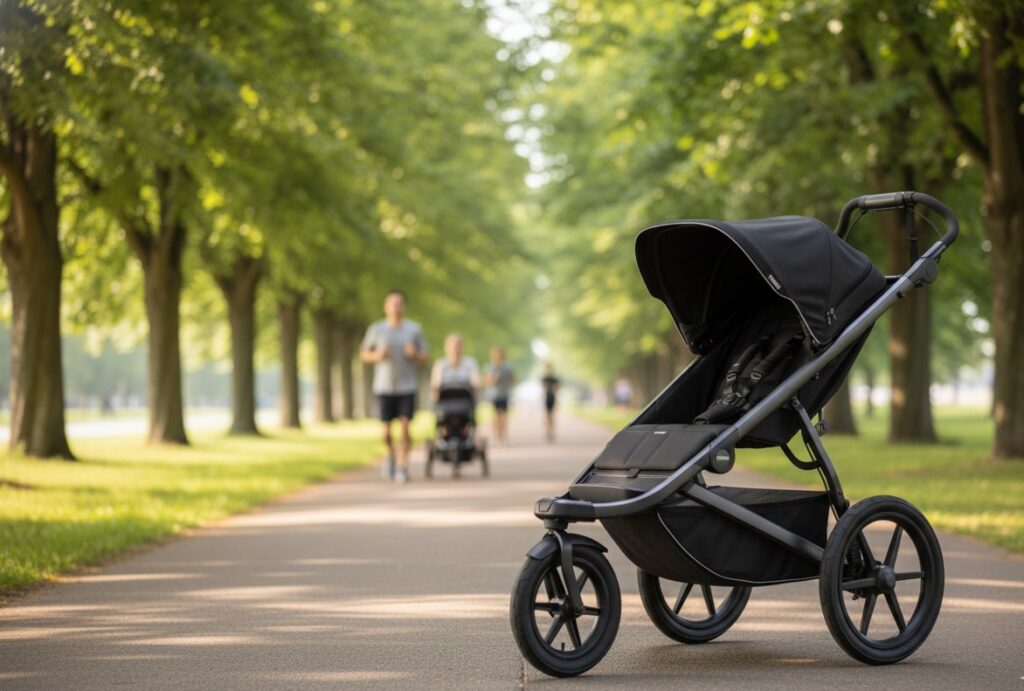
- Detailed Pros: This is the top choice for serious runners and active parents. Its performance is defined by an incredibly smooth push; the large, air-filled tires and advanced suspension system make it feel like it’s gliding, absorbing shock on all terrains. Its standout safety feature is the integrated twist handbrake, which provides smooth, proportional speed control on downhills—something a simple parking brake cannot do. It’s packed with smart features, including a large, zippered, water-resistant cargo basket, an extensive-coverage canopy with ventilation, and a simple one-hand fold.
- Realistic Cons: It is expensive. As a jogger, it is very long and bulky, making it cumbersome to maneuver in tight indoor spaces like stores or restaurants. The most common complaint is that the wheels can develop a persistent “squeak” over time. There are also user reports of the foot-activated parking brake (separate from the handbrake) sticking or failing.
5. Nuna MIXX Next
Segment: Best Premium All-Purpose Stroller (Newborn Focus)
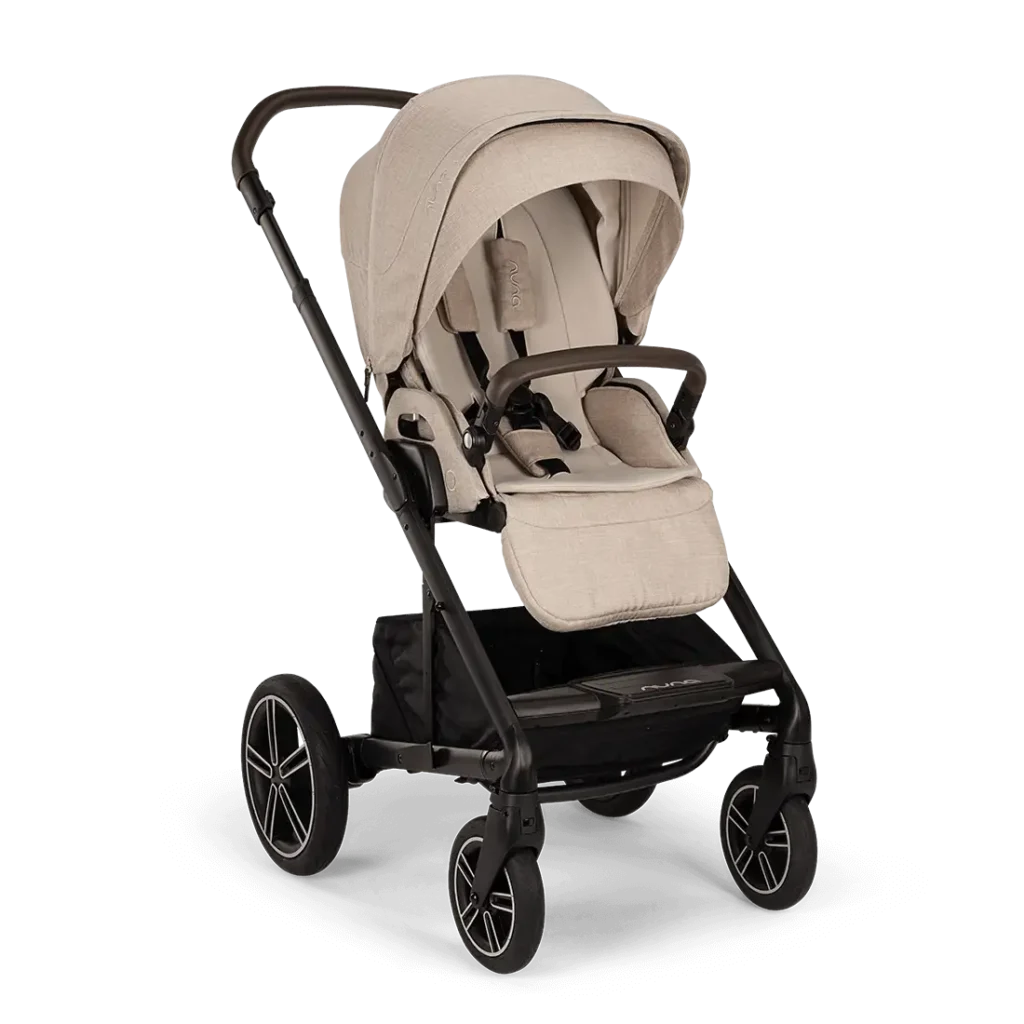
- Detailed Pros: The MIXX Next is a luxury stroller that competes directly with the UPPAbaby Cruz, but its main advantage is its true lay-flat recline. The seat can recline to a completely flat position, making it safe and comfortable for newborns from day one without needing to buy a separate bassinet. It’s known for its premium materials, including plush, high-end fabrics and a solid frame. The all-wheel suspension provides a very smooth ride , and parents consistently rave about the MagneTech Secure Snap™, a magnetic harness buckle that makes securing your child almost effortless.
- Realistic Cons: The “Toddler Slump” is the most significant and widespread complaint about this stroller. The toddler seat is shallow and does not sit at a fully upright 90-degree angle. This causes children (especially over 1 year old) to slump down uncomfortably, constantly trying to pull themselves up. It is also very heavy for a single stroller at 28.3 lbs , and its storage basket is noticeably smaller and harder to access than its main competitors.
6. Baby Jogger City Mini GT2
Segment: Best Compact All-Terrain “Workhorse”
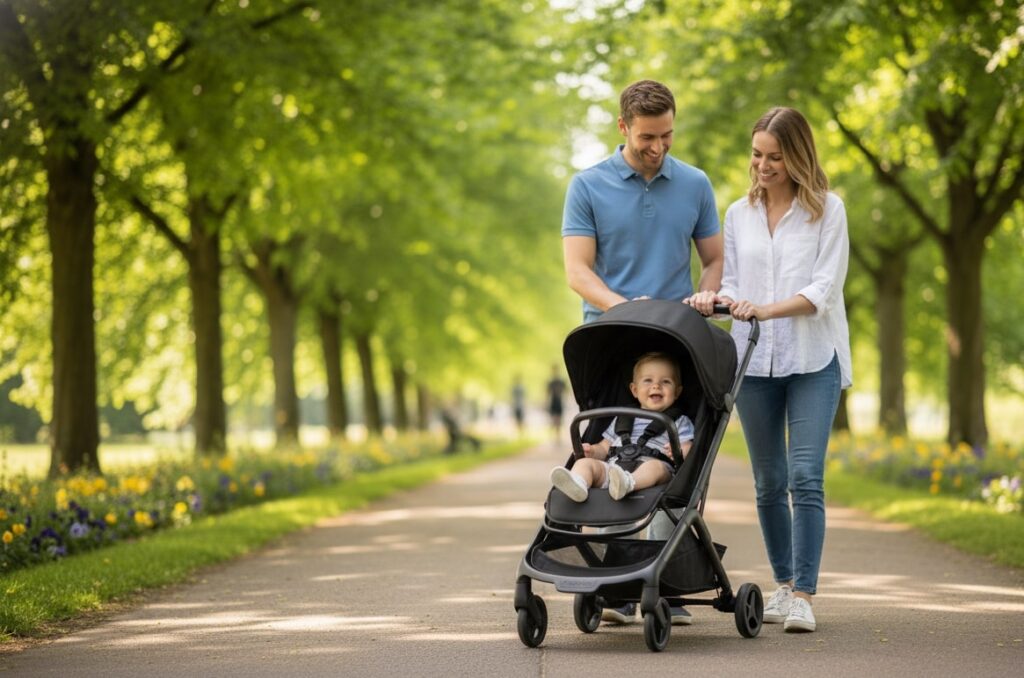
- Detailed Pros: The City Mini GT2 is a legend in the stroller world for two key reasons. First is its patented “Quick-Fold” technology; you simply pull a strap in the seat, and the entire stroller collapses in one motion with one hand. It is arguably the easiest and most satisfying fold on the market. Second are its “Forever-Air” rubber tires. These are foam-filled, meaning they provide the smooth, all-terrain grip of an air-filled tire but never go flat—a huge maintenance advantage. For its mid-range price, it also includes premium features like an adjustable-height handlebar and a hand-operated parking brake.
- Realistic Cons: The storage basket is notoriously poor. It’s small, but the main issue is a structural frame bar that runs directly across the access point, making it incredibly difficult to get even a medium-sized diaper bag in or out. Like the Nuna MIXX, its seat does not sit fully upright, which is a common complaint from parents of curious toddlers.
7. Mockingbird Single-to-Double 2.0
Segment: Best High-Value Convertible
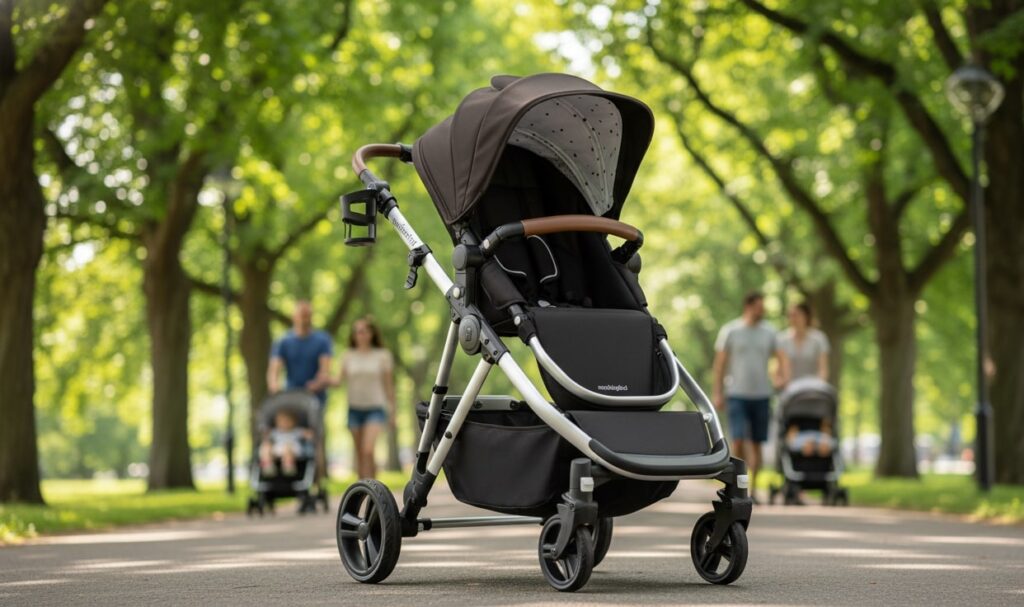
- Detailed Pros: Mockingbird built its brand as a direct-to-consumer (DTC) disruptor, and its value proposition is undeniable. It delivers the aesthetic and functionality of a $1,000+ stroller (like the UPPAbaby Vista) for less than half the price. Its storage basket is massive, easily accessible, and a key feature that families love. The stroller is incredibly versatile, offering over 19 seating configurations (with the second seat) , a reversible seat, a one-hand fold, and compatibility with most major car seat brands.
- Realistic Cons: The brand’s reputation was severely damaged by a massive 2022-2023 recall affecting nearly 175,000 strollers due to the frame cracking and posing a fall hazard to children. Even after the fix, a significant number of users continue to report serious quality control issues, such as front wheels snapping off, recline strings breaking, and the frame feeling unstable. It is also extremely heavy and bulky, weighing 35 lbs in double mode, which makes it very difficult to lift and maneuver.
8. Chicco Bravo Trio Travel System
Segment: Best Mid-Range “Workhorse” Travel System
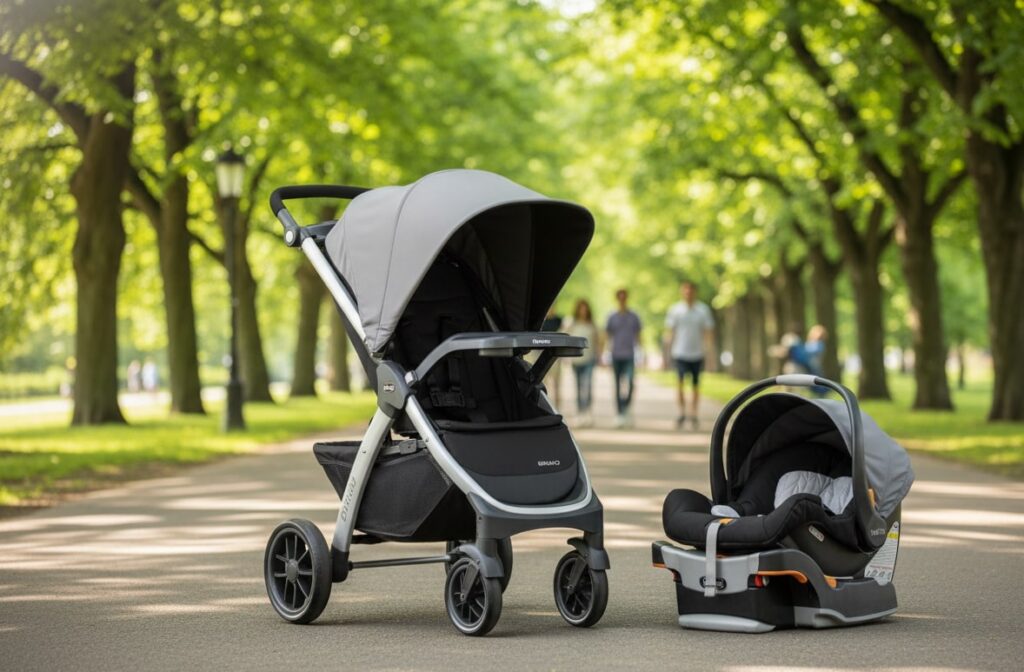
- Detailed Pros: The Bravo Trio hits the perfect sweet spot of value, reliability, and features. For a mid-range price (often under $400), it bundles a quality stroller with the top-rated Chicco KeyFit 30 Infant Car Seat. Its one-hand fold is brilliant; a handle under the seat cushion allows you to collapse the stroller effortlessly, and it automatically self-stands when folded. Unlike premium brands that nickel-and-dime for accessories, the Bravo comes standard with a parent tray (with cup holders) and a child’s snack tray. The car seat integration is seamless, with a secure “click” that gives parents confidence.
- Realistic Cons: The wheels are plastic, not rubber. This is fine for smooth surfaces like sidewalks or malls, but they perform poorly on uneven terrain, gravel, grass, or snow. The canopy is considered a bit short, offering less coverage than other models. Some users have reported that the front wheels can start to wobble or break after extended use.
9. Graco Modes Pramette Travel System
Segment: Best Budget Versatility (3-in-1)
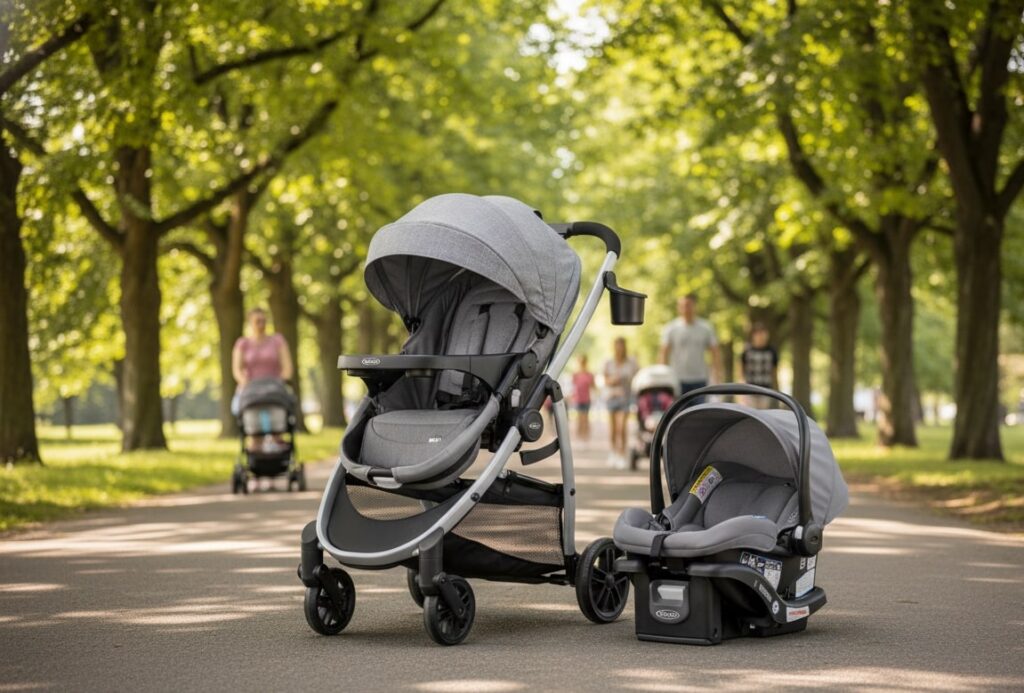
- Detailed Pros: The Pramette’s genius is its versatility at a budget price. It’s a full travel system that includes an infant car seat, but its main feature is the toddler seat which cleverly converts into a bassinet (or “pramette”). Parents love this feature, as it allows their newborn to lie completely flat on walks, which is better for their development than being scrunched in a car seat. It also offers features rare at this price point, like a reversible seat (parent-facing or world-facing) and a large storage basket.
- Realistic Cons: The “Manual Confusion” is the single biggest complaint. The manual states the pramette mode is only safe up to 15 lbs, but the toddler seat isn’t recommended until 6+ months. This creates a confusing and stressful “gap” (from ~3-6 months) where the baby is too big for the pramette but too small for the toddler seat, essentially forcing parents to use the infant car seat for all walks. Other common complaints include a shallow toddler seat that causes kids to slide and a storage basket that is difficult to access when the seat is attached.
10. Doona Infant Car Seat & Stroller
Segment: Best Niche Hybrid (Car Seat with Wheels)
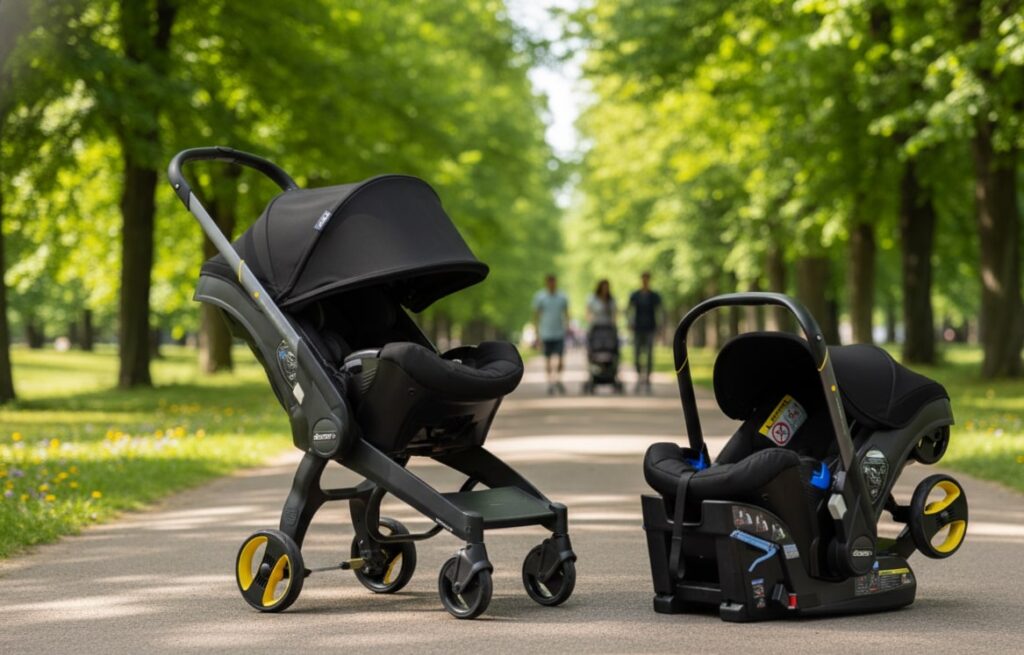
- Detailed Pros: The Doona is a “unicorn” product: it is an infant car seat with wheels integrated into the body that pop out with the click of a button. For a specific lifestyle, its convenience is unmatched. It is a game-changer for urban parents who frequently use taxis/Ubers (it can be installed without the base), families who fly often (it’s FAA-approved and can be wheeled down the airplane aisle), or any parent just running quick errands like a school drop-off or a trip to the post office.
- Realistic Cons: The Doona is famously polarizing. The #1 deal-breaker is its complete lack of storage—there is no basket, meaning you must carry the diaper bag, your purse, and everything else. It has a very short lifespan; most babies outgrow it by 12-15 months, making it a $550+ investment for just one year. You will still need to buy a convertible car seat and a regular stroller afterward. It is also very heavy (16.5 lbs before baby) to lift in and out of the car , and its handle is too short for many parents over 5’8″, causing them to hunch over while pushing.
Final Expert Recommendations
After analyzing the entire market, one piece of advice stands above all: Embrace the “Two-Stroller Reality.”
The quest for the “one stroller to rule them all” is often a trap. The perfect, “beast” of a stroller with a huge basket and all-terrain wheels (like the Vista or a jogger) is fantastic for long neighborhood walks but is a nightmare to fold and heave into your trunk for a quick trip to the grocery store.
For maximum happiness, many veteran parents recommend a “Primary” stroller that stays in the garage for walks and a “Secondary” lightweight stroller that lives in the car for errands.
Here are the final recommendations based on your most likely lifestyle profile:
- For the Suburban Family Planning for More Kids: Winner: UPPAbaby Vista V3. The storage basket, build quality, and resale value are simply unmatched for a suburban, SUV-based lifestyle. It’s an investment that holds its value and genuinely makes daily logistics easier.
- For the Urban Family Where Space is Everything: Winner: Joolz Aer+ or Bugaboo Butterfly. Your best strategy is to skip the full-size stroller entirely. Use a premium, durable travel stroller as your one-and-only. It’s light enough to carry up subway stairs but sturdy enough to handle daily city walks.
- For the Serious Runner: Winner: Thule Urban Glide 3. If you actually plan to run (not just jog), you need a stroller built for it. The Thule’s large, air-filled tires, superior suspension, and, most importantly, the twist handbrake for downhill control are non-negotiable safety and performance features.
- For the Best-Value, No-Nonsense “Workhorse”: Winner: Chicco Bravo Trio Travel System. It’s the “Toyota Camry” of strollers. It’s not the flashiest, but it’s reliable, affordable, incredibly user-friendly, and has all the features you actually need (parent tray, easy fold) without the premium price tag.
- For the High-Value “Gamble”: Winner: Mockingbird 2.0. If your budget is tight but you crave the features and style of the UPPAbaby Vista, the Mockingbird is the answer. The value is undeniable. However, you must buy it with the full knowledge of its serious 2022-2023 recall history and the lingering user complaints about quality control.
FAQs
Yes, if you want a premium single stroller with a massive storage basket and high build quality. However, be aware that many parents find it very heavy and awkward to maneuver when converted to a double stroller.
The brand’s reputation was significantly damaged by a major 2022-2023 recall for its frame cracking, which posed a fall hazard to children. While the 2.0 model aims to fix this, some users still report quality control issues like wheels breaking.
The three biggest complaints are: 1) It has absolutely no storage basket, 2) It is very heavy to lift into the car, and 3) It has a very short lifespan, as most babies outgrow it by 12-15 months.
Its wheels are made of plastic. While great for smooth indoor surfaces like malls or on flat sidewalks, they perform poorly on rough terrain, grass, gravel, or snow.
Most experts advise against it. Jogging strollers are fantastic for their purpose (running, trails) but are often too bulky and difficult to maneuver in tight spaces like stores or cafes. Many families end up buying a jogger for exercise and a separate, lightweight stroller for daily errands.